Electronic certificates of origin enable preferential tariffs under the India-New Zealand FTA when format, verification, and filing requirements are m...
Customs approval for liquid cargo exports extends designated jetty operations while existing boarding station and customs area limits remain unchanged...
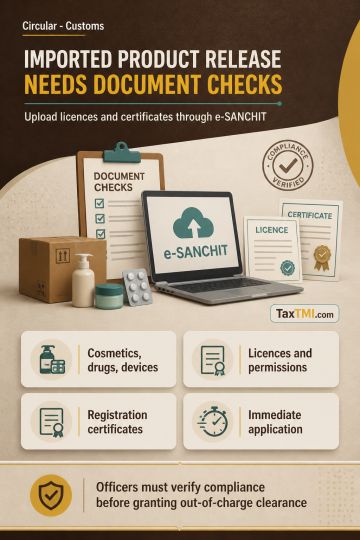
Mandatory compliance document verification now conditions out-of-charge clearance for imported cosmetics, drugs, and medical devices through PGA-facil...
Double taxation of turnover requires holistic verification across separately registered units and permits limited rectification of overlapping assessm...
The HC disposed of the appeal by remanding the matter to the Commissioner (Appeals) for fresh consideration of the respondent's grounds against the Adjudicating Authority's order dated 26.02.2019, which upheld the inclusion of 1% handling charges in the assessable value for customs duty under a CIF contract. The respondent was granted liberty to file an appeal challenging that order. The Commissioner (Appeals) was directed to reassess the refund claim for excess customs duty paid, particularly regarding the 1% handling charges paid by self-assessment, in light of applicable Supreme Court precedents. The Tribunal's earlier order was set aside as it lacked the benefit of the subsequent Adjudicating Authority's order. The remand ensures adherence to principles of fair adjudication and proper examination of documentary evidence before determining the refund entitlement.
The HC disposed of the appeal by remanding the matter to the Commissioner (Appeals) for fresh consideration of the respondent's grounds against the Adjudicating Authority's order dated 26.02.2019, which upheld the inclusion of 1% handling charges in the assessable value for customs duty under a CIF contract. The respondent was granted liberty to file an appeal challenging that order. The Commissioner (Appeals) was directed to reassess the refund claim for excess customs duty paid, particularly regarding the 1% handling charges paid by self-assessment, in light of applicable Supreme Court precedents. The Tribunal's earlier order was set aside as it lacked the benefit of the subsequent Adjudicating Authority's order. The remand ensures adherence to principles of fair adjudication and proper examination of documentary evidence before determining the refund entitlement.
Note: It is a system-generated summary and is for quick reference only.
 TaxTMI
 TaxTMI

 of 4923