Membership-consent thresholds for oppression petitions are satisfied by unchallenged voter-list consents, while unsupported forgery claims require pro...
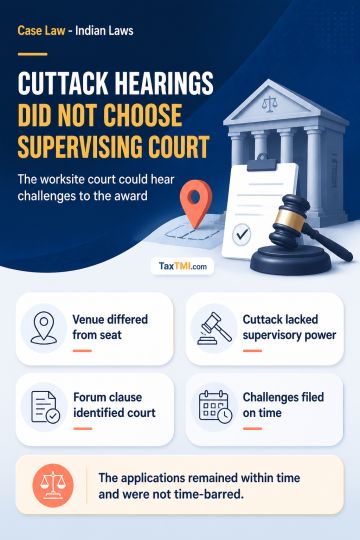
Juridical seat versus arbitral venue determines supervisory court jurisdiction, while timely award challenges remain within the prescribed limitation ...
The DSC dismissed the bail application of the accused, a key partner of the manufacturing firm, arrested under Section 69 of the CGST Act for clandestine supply of goods without invoicing and fraudulent availing of ITC. Investigation revealed extensive cash transactions amounting to approximately Rs. 70 crore, misuse of input tax credit exceeding Rs. 9.32 crore, and GST evasion of Rs. 57.82 lakh. The accused confessed to the offences, including receipt of cash payments and payment of commission for fraudulent invoices. Given the absence of a charge sheet, the likelihood of evidence tampering, witness influence, and risk of flight, the court found bail inappropriate. Considering the gravity of the economic offences and established legal principles, the accused was denied bail to prevent obstruction of justice and ensure accountability.
The DSC dismissed the bail application of the accused, a key partner of the manufacturing firm, arrested under Section 69 of the CGST Act for clandestine supply of goods without invoicing and fraudulent availing of ITC. Investigation revealed extensive cash transactions amounting to approximately Rs. 70 crore, misuse of input tax credit exceeding Rs. 9.32 crore, and GST evasion of Rs. 57.82 lakh. The accused confessed to the offences, including receipt of cash payments and payment of commission for fraudulent invoices. Given the absence of a charge sheet, the likelihood of evidence tampering, witness influence, and risk of flight, the court found bail inappropriate. Considering the gravity of the economic offences and established legal principles, the accused was denied bail to prevent obstruction of justice and ensure accountability.
Note: It is a system-generated summary and is for quick reference only.
 TaxTMI
  TaxTMI
 of 4897