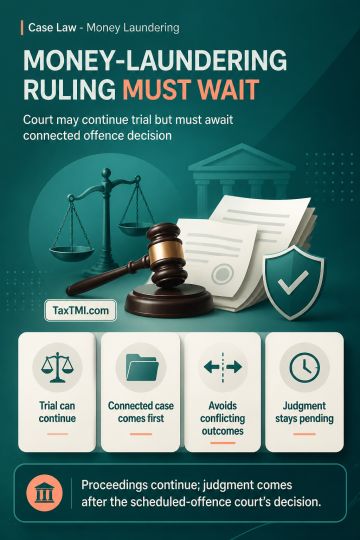
Money-laundering judgment timing requires awaiting the scheduled-offence decision despite continuation of the underlying trial where outcomes directly...
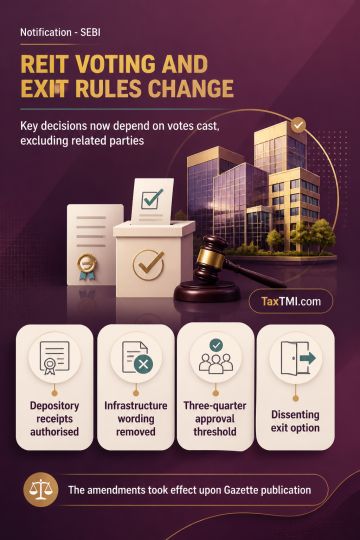
Accredited investor eligibility expands through securities-market exposure, while alternative investment fund disputes require prescribed resolution a...
Customs Assessment Portal centralises classification and valuation guidance to support consistent, transparent and informed compliance across stakehol...
The HC upheld the acquittal of the accused in a cheque dishonour case due to insufficiency of funds, finding no perversity or illegality in the trial court's appreciation of evidence. The complainant failed to establish the existence of a legally enforceable debt or liability discharged by the cheque, especially as the statutory presumption under Section 139 of the N.I. Act was not attracted. Independent and credible evidence to substantiate the debt was lacking, and the accused's version was found more probable. The appellate court emphasized the high threshold for interference with acquittal orders, which requires the trial court's conclusion to be manifestly unjust or perverse. Since two views were possible and the trial court's reasoning was reasonable, the appeal against acquittal was dismissed, affirming the accused's innocence and maintaining the presumption in their favor.
The HC upheld the acquittal of the accused in a cheque dishonour case due to insufficiency of funds, finding no perversity or illegality in the trial court's appreciation of evidence. The complainant failed to establish the existence of a legally enforceable debt or liability discharged by the cheque, especially as the statutory presumption under Section 139 of the N.I. Act was not attracted. Independent and credible evidence to substantiate the debt was lacking, and the accused's version was found more probable. The appellate court emphasized the high threshold for interference with acquittal orders, which requires the trial court's conclusion to be manifestly unjust or perverse. Since two views were possible and the trial court's reasoning was reasonable, the appeal against acquittal was dismissed, affirming the accused's innocence and maintaining the presumption in their favor.
Note: It is a system-generated summary and is for quick reference only.
 TaxTMI
  TaxTMI
 of 4920