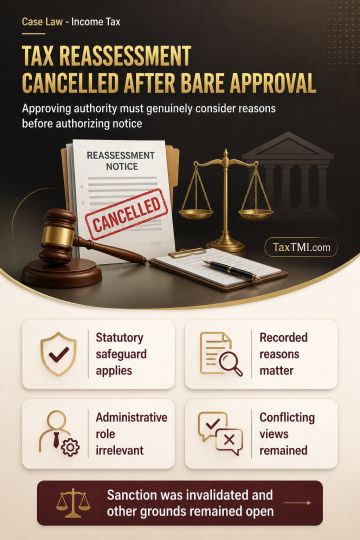
Anti-profiteering obligations survive business demerger, complaint withdrawal, and customized supply arrangements where rate-reduction benefits are no...
Road restoration charges constitute taxable services when requested for commercial pipeline activity, requiring reverse-charge GST from the business r...
Interest on delayed release of requisitioned cash includes statutory pre-assessment interest and restitutionary compensation for unlawful post-assessm...
Incomplete inventory records justify rejecting accounts, while profit estimation requires relevant comparable material and interest falls under other ...
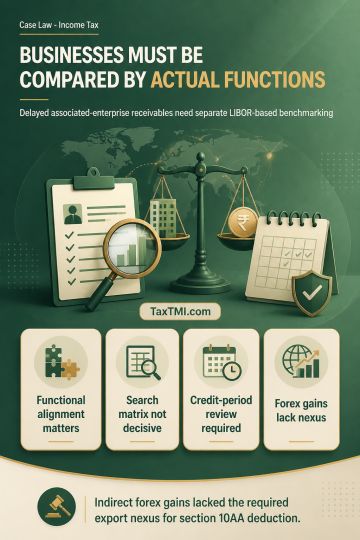
Transfer-pricing comparability requires functional alignment; delayed associated-enterprise receivables need separate LIBOR-based benchmarking, while ...
The HC set aside the impugned orders of the Appellate Authority and the Proper Officer, holding that the timeline under Section 107(4) of the WBGST Act is directory, not mandatory, and the Limitation Act applies. The appellant demonstrated sufficient cause for condonation of delay in filing the appeal. The court found a violation of natural justice principles as the notice under Section 73(1) was improperly communicated via the Additional Tab instead of the Normal Tab, frustrating proper service and the opportunity for hearing mandated under Sections 73(9) and 75(4). The restrictive scope of intra-court appeal was not invoked due to the fundamental procedural lapses. The judgment of the Single Judge was held to contain a patent error of law in interpreting timelines strictly while ignoring mandatory hearing provisions, warranting interference. The writ petition was allowed, and the assessment order was quashed accordingly.
The HC set aside the impugned orders of the Appellate Authority and the Proper Officer, holding that the timeline under Section 107(4) of the WBGST Act is directory, not mandatory, and the Limitation Act applies. The appellant demonstrated sufficient cause for condonation of delay in filing the appeal. The court found a violation of natural justice principles as the notice under Section 73(1) was improperly communicated via the Additional Tab instead of the Normal Tab, frustrating proper service and the opportunity for hearing mandated under Sections 73(9) and 75(4). The restrictive scope of intra-court appeal was not invoked due to the fundamental procedural lapses. The judgment of the Single Judge was held to contain a patent error of law in interpreting timelines strictly while ignoring mandatory hearing provisions, warranting interference. The writ petition was allowed, and the assessment order was quashed accordingly.
Note: It is a system-generated summary and is for quick reference only.
 TaxTMI
  TaxTMI
 of 4918