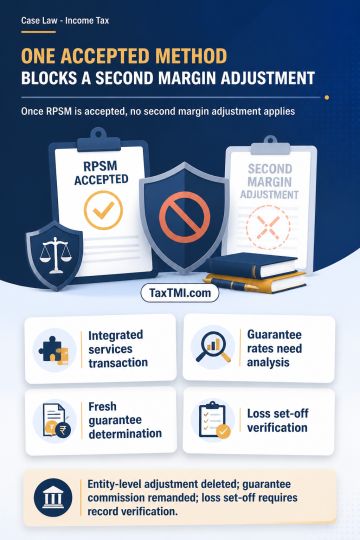
Form 26AS evidence requires successor-entity accounting verification after business transfer, while invoice-supported related-party advertising expend...
Money-laundering judgment timing requires awaiting the scheduled-offence decision despite continuation of the underlying trial where outcomes directly...
Accredited investor eligibility expands through securities-market exposure, while alternative investment fund disputes require prescribed resolution a...
Page of 4916
Press 'Enter' after typing page number.
41 to 60 of 98302 Results
❮
❯
❯❯
0 / 200
Expand Note
Add to Folder
No Folders have been created
+
Are you sure you want to delete "My most important" ?
The NCLAT dismissed the application for condonation of a 152-day delay in refiling the appeal, holding that the Applicant failed to demonstrate sufficient or justifiable cause. The Applicant did not provide a credible explanation for the delay or substantiate the alleged difficulties in obtaining clear copies of documents. Furthermore, the Applicant sought exemption from filing true typed copies of dim/illegible documents, undermining the claim of diligent efforts to cure defects. The Tribunal found the delay resulted from negligence and lack of bona fide efforts rather than circumstances beyond the Applicant's control. Given the importance of timely proceedings in insolvency matters, the Tribunal declined to condone the delay, emphasizing that the Applicant did not show reasonable grounds to warrant relief. Accordingly, the application for condonation of delay was rejected and the appeal was not admitted.
The NCLAT dismissed the application for condonation of a 152-day delay in refiling the appeal, holding that the Applicant failed to demonstrate sufficient or justifiable cause. The Applicant did not provide a credible explanation for the delay or substantiate the alleged difficulties in obtaining clear copies of documents. Furthermore, the Applicant sought exemption from filing true typed copies of dim/illegible documents, undermining the claim of diligent efforts to cure defects. The Tribunal found the delay resulted from negligence and lack of bona fide efforts rather than circumstances beyond the Applicant's control. Given the importance of timely proceedings in insolvency matters, the Tribunal declined to condone the delay, emphasizing that the Applicant did not show reasonable grounds to warrant relief. Accordingly, the application for condonation of delay was rejected and the appeal was not admitted.
Note: It is a system-generated summary and is for quick reference only.
 TaxTMI
 TaxTMI

 of 4916