Interest on delayed release of requisitioned cash includes statutory pre-assessment interest and restitutionary compensation for unlawful post-assessm...
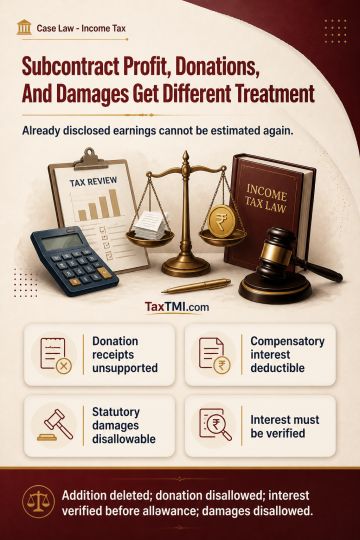
Incomplete inventory records justify rejecting accounts, while profit estimation requires relevant comparable material and interest falls under other ...
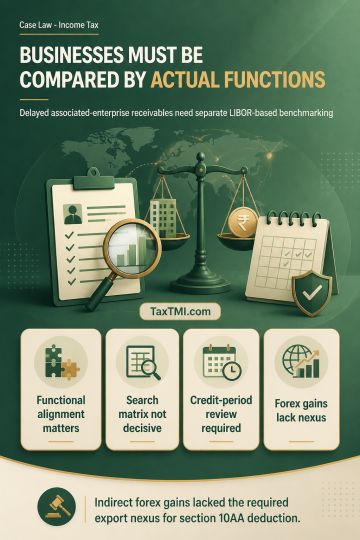
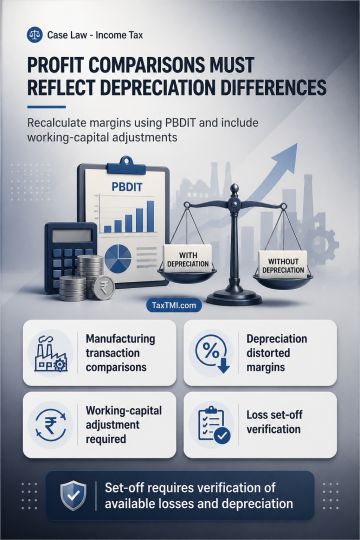
Transfer-pricing comparability requires functional alignment; delayed associated-enterprise receivables need separate LIBOR-based benchmarking, while ...
Extended reassessment limitation in search cases requires asset-linked escaped income, invalidating additions based only on unexplained money or expen...
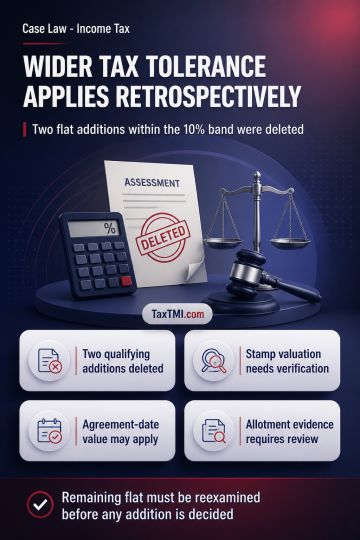
Enhanced tolerance band under section 43CA applies retrospectively, deleting qualifying deemed-sale additions while disputed stamp valuation requires ...
The SC upheld the High Court's determination that the appellant, a UAE tax resident company, maintained a fixed place PE in India under Article 5(1) of the India-UAE DTAA. Despite no single employee exceeding the nine-month presence threshold under Article 5(2), the aggregate continuous and coordinated business activities, including operational control and enforcement of compliance, established a substantive commercial nexus with the Indian hotel's core functions. The appellant's income from service charges under the SOSA agreements was thus attributable to the PE and taxable in India. The Court emphasized that taxability depends on business presence rather than global profitability, affirming that profit attribution to a PE is permissible even if the foreign enterprise incurs losses. The decision reinforces that the existence of a PE requires a fact-specific inquiry into control, supervision, and continuity of operations rather than a rigid formula.
The SC upheld the High Court's determination that the appellant, a UAE tax resident company, maintained a fixed place PE in India under Article 5(1) of the India-UAE DTAA. Despite no single employee exceeding the nine-month presence threshold under Article 5(2), the aggregate continuous and coordinated business activities, including operational control and enforcement of compliance, established a substantive commercial nexus with the Indian hotel's core functions. The appellant's income from service charges under the SOSA agreements was thus attributable to the PE and taxable in India. The Court emphasized that taxability depends on business presence rather than global profitability, affirming that profit attribution to a PE is permissible even if the foreign enterprise incurs losses. The decision reinforces that the existence of a PE requires a fact-specific inquiry into control, supervision, and continuity of operations rather than a rigid formula.
Note: It is a system-generated summary and is for quick reference only.
 TaxTMI
 TaxTMI

 of 4921