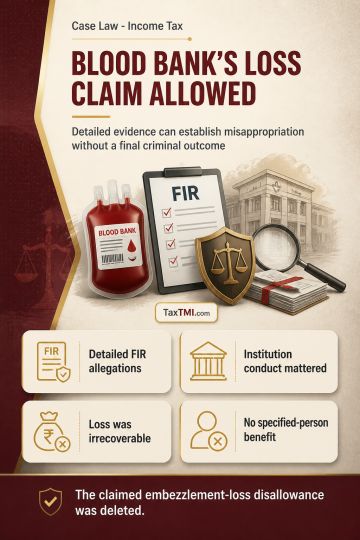
Embezzlement losses in charitable institutions remain allowable when misappropriation is established, irrecoverable, and not a specified-person benefi...
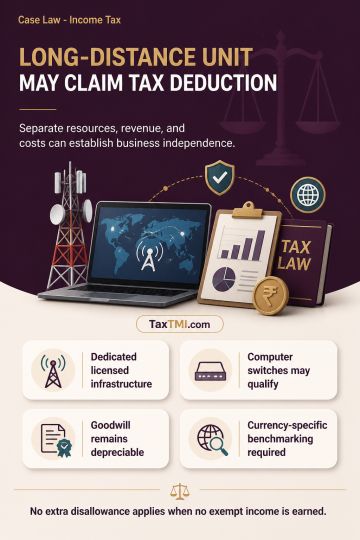
National long-distance undertaking status supports deduction where separately licensed infrastructure, resources, revenue, and expenditure establish c...
Agency reimbursement income follows contractual deposit-liability computation, while pending deposit collections do not constitute deemed-dividend loa...
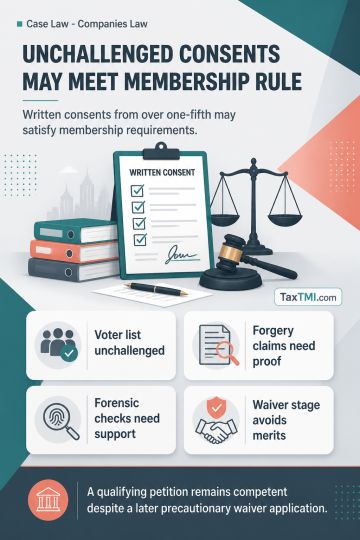
Membership-consent thresholds for oppression petitions are satisfied by unchallenged voter-list consents, while unsupported forgery claims require pro...
The HC held that issuance of a single show cause notice encompassing multiple financial years contravenes the GST Act, which mandates that show cause notices must correspond to individual tax periods as defined under Section 2(106) and Sections 73/74. The Court emphasized that "bunching" violates principles of natural justice and statutory provisions, as each financial year constitutes a separate tax period. Furthermore, Section 128's provision for waiver schemes cannot justify pre-notification notices aggregating multiple years, as this imposes undue hardship on taxpayers. The Court clarified that show cause notices must be issued either based on annual returns after their filing or on monthly returns if issued prior to annual return submission. Accordingly, the petition challenging the validity of the multi-year show cause notice was allowed, reinforcing strict adherence to the statutory time limitation and procedural safeguards under the GST Act.
The HC held that issuance of a single show cause notice encompassing multiple financial years contravenes the GST Act, which mandates that show cause notices must correspond to individual tax periods as defined under Section 2(106) and Sections 73/74. The Court emphasized that "bunching" violates principles of natural justice and statutory provisions, as each financial year constitutes a separate tax period. Furthermore, Section 128's provision for waiver schemes cannot justify pre-notification notices aggregating multiple years, as this imposes undue hardship on taxpayers. The Court clarified that show cause notices must be issued either based on annual returns after their filing or on monthly returns if issued prior to annual return submission. Accordingly, the petition challenging the validity of the multi-year show cause notice was allowed, reinforcing strict adherence to the statutory time limitation and procedural safeguards under the GST Act.
Note: It is a system-generated summary and is for quick reference only.
 TaxTMI
  TaxTMI
 of 4888