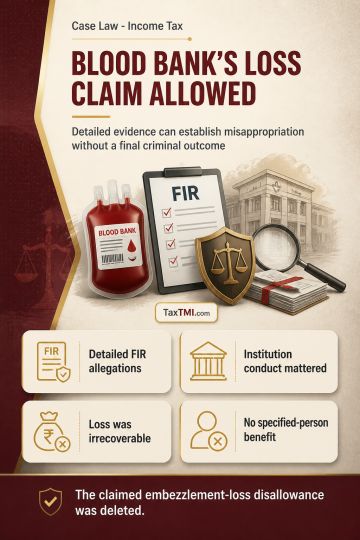
Embezzlement losses in charitable institutions remain allowable when misappropriation is established, irrecoverable, and not a specified-person benefi...
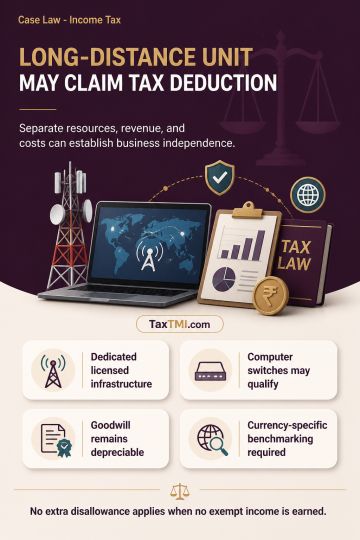
National long-distance undertaking status supports deduction where separately licensed infrastructure, resources, revenue, and expenditure establish c...
Agency reimbursement income follows contractual deposit-liability computation, while pending deposit collections do not constitute deemed-dividend loa...
Membership-consent thresholds for oppression petitions are satisfied by unchallenged voter-list consents, while unsupported forgery claims require pro...
The DSC rejected the bail application of the accused proprietor of M/S New Global Scrap Traders, charged under Sections 132(1)(b), 132(1)(c), and 132(1)(i) of the CGST Act, 2017, for fraudulent availing and utilization of input tax credit amounting to Rs. 23,47,68,801/- through fake invoices without actual supply of goods. The court found no violation of fundamental rights under Article 22(1) and (2). Given the gravity of the offence, evidence of issuance of bogus invoices, and risk of evidence tampering, witness influence, and flight, the accused was deemed unfit for bail at this stage. The prosecution's case demonstrated substantial material indicating deliberate tax evasion and fraud, justifying continued custodial detention to safeguard the investigation and public interest.
The DSC rejected the bail application of the accused proprietor of M/S New Global Scrap Traders, charged under Sections 132(1)(b), 132(1)(c), and 132(1)(i) of the CGST Act, 2017, for fraudulent availing and utilization of input tax credit amounting to Rs. 23,47,68,801/- through fake invoices without actual supply of goods. The court found no violation of fundamental rights under Article 22(1) and (2). Given the gravity of the offence, evidence of issuance of bogus invoices, and risk of evidence tampering, witness influence, and flight, the accused was deemed unfit for bail at this stage. The prosecution's case demonstrated substantial material indicating deliberate tax evasion and fraud, justifying continued custodial detention to safeguard the investigation and public interest.
Note: It is a system-generated summary and is for quick reference only.
 TaxTMI
  TaxTMI
 of 4888