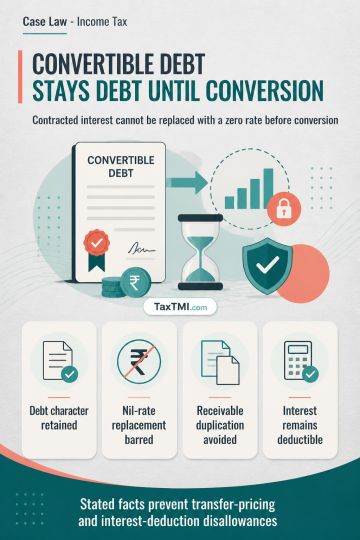
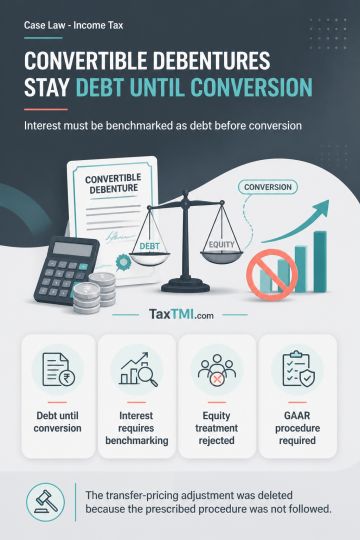
Compulsorily convertible debentures remain debt before conversion, preventing transfer-pricing and interest-deduction disallowances on the stated fact...
Stock-in-trade transfer taxability follows possession and consideration, not later conveyance registration, limiting deemed-value provisions to the ac...
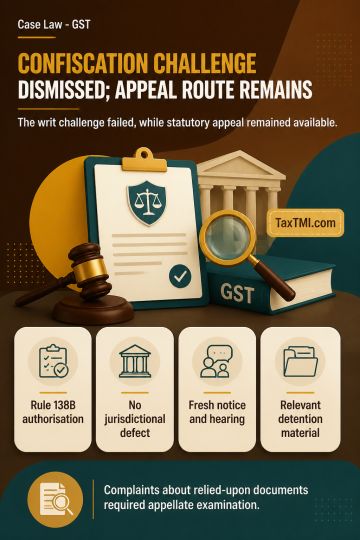
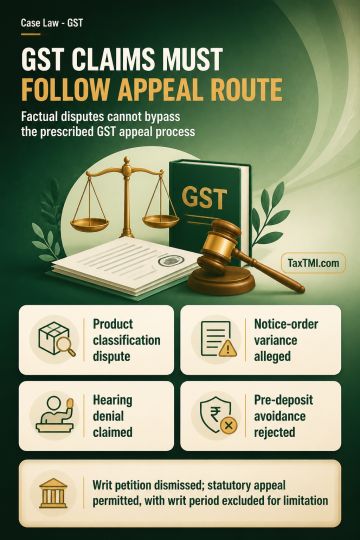
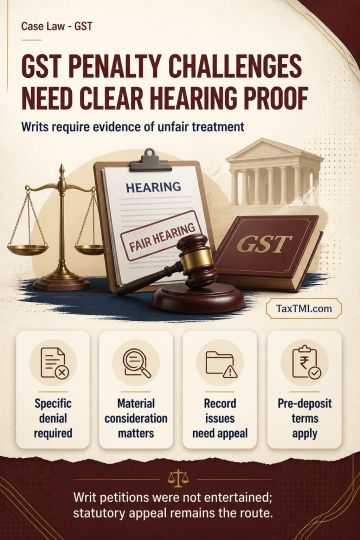
Alternative statutory remedy under GST bars writ challenge where classification, notice variance, and hearing disputes require factual appellate revie...
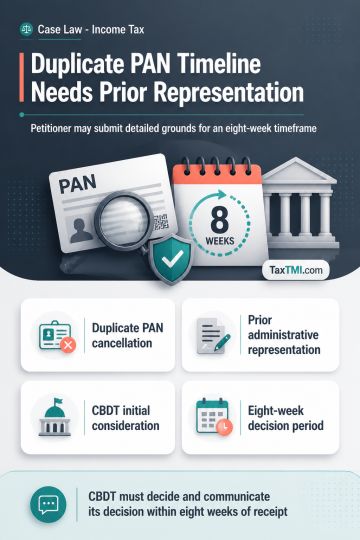
Duplicate PAN cancellation timeframe requires prior administrative representation before judicial intervention, ensuring a time-bound decision on the ...
Page of 4886
Press 'Enter' after typing page number.
21 to 40 of 97711 Results
❮
❯
❯❯
0 / 200
Expand Note
Add to Folder
No Folders have been created
+
Are you sure you want to delete "My most important" ?
The HC held that the application under Section 319 Cr.P.C. to implead Applicants 2 to 4 as accused alongside accused No. 1-firm was without jurisdiction due to the absence of prior sanction mandated by Section 279 of the Income Tax Act. The court emphasized that mandatory sanction is a prerequisite even under Section 319 Cr.P.C. The evidence did not establish that Applicants 2 to 4 were responsible for the firm's conduct or that the offence was committed with their consent, connivance, or negligence as required under Section 278B of the Income Tax Act. Furthermore, the knowledge of their partnership was not newly discovered evidence. Consequently, the Sessions Judge erred in allowing the application, and the revision petition was allowed, quashing and setting aside the order impleading Applicants 2 to 4 as accused.
The HC held that the application under Section 319 Cr.P.C. to implead Applicants 2 to 4 as accused alongside accused No. 1-firm was without jurisdiction due to the absence of prior sanction mandated by Section 279 of the Income Tax Act. The court emphasized that mandatory sanction is a prerequisite even under Section 319 Cr.P.C. The evidence did not establish that Applicants 2 to 4 were responsible for the firm's conduct or that the offence was committed with their consent, connivance, or negligence as required under Section 278B of the Income Tax Act. Furthermore, the knowledge of their partnership was not newly discovered evidence. Consequently, the Sessions Judge erred in allowing the application, and the revision petition was allowed, quashing and setting aside the order impleading Applicants 2 to 4 as accused.
Note: It is a system-generated summary and is for quick reference only.
 TaxTMI
  TaxTMI
 of 4886