Duplicate PAN allocation requires record verification and deactivation reasons before assessment-related transactions can be attributed to an assessee...
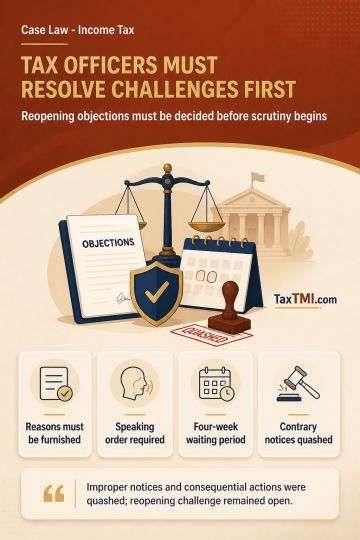
Faceless assessment safeguards require requested personal hearings and adequate final show-cause response time, failing which reassessment is required...
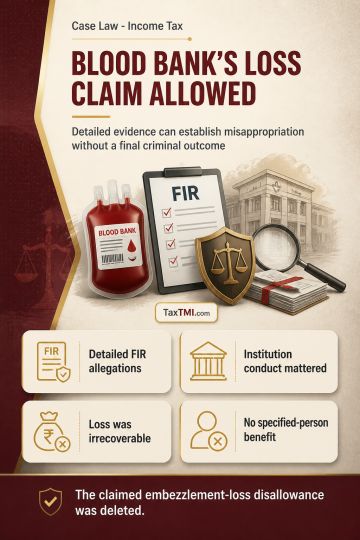
Embezzlement losses in charitable institutions remain allowable when misappropriation is established, irrecoverable, and not a specified-person benefi...
National long-distance undertaking status supports deduction where separately licensed infrastructure, resources, revenue, and expenditure establish c...
Agency reimbursement income follows contractual deposit-liability computation, while pending deposit collections do not constitute deemed-dividend loa...
The HC held that the application under Section 319 Cr.P.C. to implead Applicants 2 to 4 as accused alongside accused No. 1-firm was without jurisdiction due to the absence of prior sanction mandated by Section 279 of the Income Tax Act. The court emphasized that mandatory sanction is a prerequisite even under Section 319 Cr.P.C. The evidence did not establish that Applicants 2 to 4 were responsible for the firm's conduct or that the offence was committed with their consent, connivance, or negligence as required under Section 278B of the Income Tax Act. Furthermore, the knowledge of their partnership was not newly discovered evidence. Consequently, the Sessions Judge erred in allowing the application, and the revision petition was allowed, quashing and setting aside the order impleading Applicants 2 to 4 as accused.
The HC held that the application under Section 319 Cr.P.C. to implead Applicants 2 to 4 as accused alongside accused No. 1-firm was without jurisdiction due to the absence of prior sanction mandated by Section 279 of the Income Tax Act. The court emphasized that mandatory sanction is a prerequisite even under Section 319 Cr.P.C. The evidence did not establish that Applicants 2 to 4 were responsible for the firm's conduct or that the offence was committed with their consent, connivance, or negligence as required under Section 278B of the Income Tax Act. Furthermore, the knowledge of their partnership was not newly discovered evidence. Consequently, the Sessions Judge erred in allowing the application, and the revision petition was allowed, quashing and setting aside the order impleading Applicants 2 to 4 as accused.
Note: It is a system-generated summary and is for quick reference only.
 TaxTMI
  TaxTMI
 of 4894