Opportunity to furnish unsecured-loan confirmations is required before reassessment initiation; proceedings require fresh consideration after taxpayer...
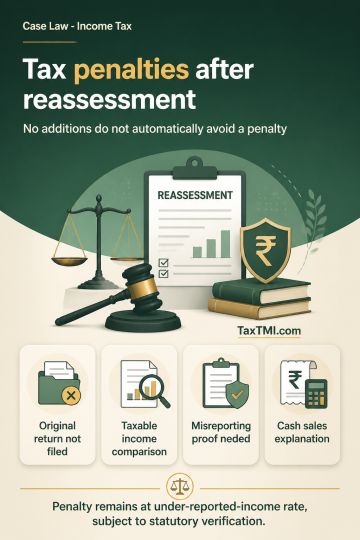
Under-reporting on a first reassessment return attracts penalty, while enhanced misreporting penalty requires proof of a statutory misreporting catego...
The HC dismissed the jurisdictional challenge to the impugned SCNs alleging breach of PFUTP Regulations and barred by res judicata and issue estoppel, holding that the petitions were a tactical attempt to delay adjudication. The Court found no merit in treating objections to the SCNs as preliminary issues, especially given the mixed questions of law and fact involved, which under Order XIV Rule 2(2) and settled principles are ordinarily not decided preliminarily. The petitions were filed belatedly, nearly two years post issuance of the SCNs, with successive delay tactics employed. The Court refrained from deciding the substantive merits, emphasizing that all issues, including those raised by petitioners, must be decided expeditiously and concurrently by the Quasi-Judicial Authority without being influenced by the present order's prima facie observations. The discretionary jurisdiction under Article 226 cannot be invoked to stall regulatory proceedings in the public interest.
The HC dismissed the jurisdictional challenge to the impugned SCNs alleging breach of PFUTP Regulations and barred by res judicata and issue estoppel, holding that the petitions were a tactical attempt to delay adjudication. The Court found no merit in treating objections to the SCNs as preliminary issues, especially given the mixed questions of law and fact involved, which under Order XIV Rule 2(2) and settled principles are ordinarily not decided preliminarily. The petitions were filed belatedly, nearly two years post issuance of the SCNs, with successive delay tactics employed. The Court refrained from deciding the substantive merits, emphasizing that all issues, including those raised by petitioners, must be decided expeditiously and concurrently by the Quasi-Judicial Authority without being influenced by the present order's prima facie observations. The discretionary jurisdiction under Article 226 cannot be invoked to stall regulatory proceedings in the public interest.
Note: It is a system-generated summary and is for quick reference only.
 TaxTMI
  TaxTMI
 of 4915