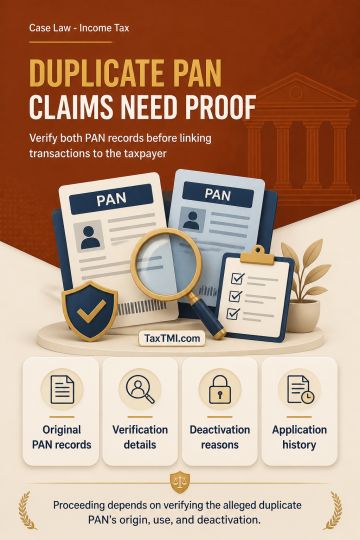
Duplicate PAN allocation requires record verification and deactivation reasons before assessment-related transactions can be attributed to an assessee...
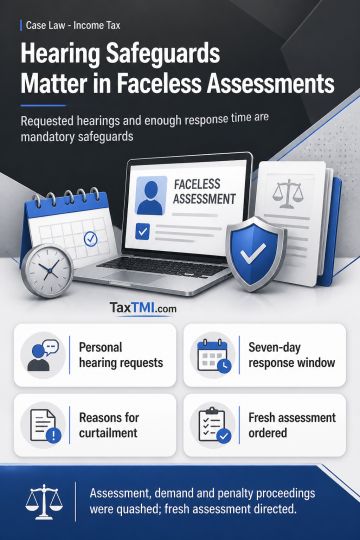
Faceless assessment safeguards require requested personal hearings and adequate final show-cause response time, failing which reassessment is required...
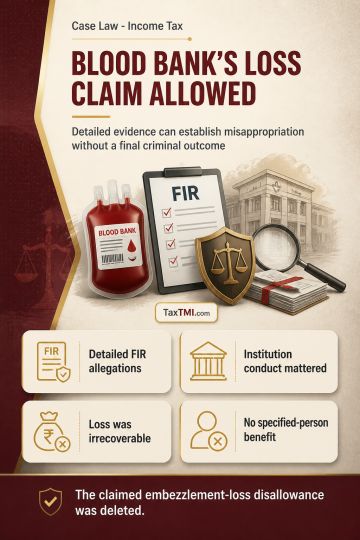
Embezzlement losses in charitable institutions remain allowable when misappropriation is established, irrecoverable, and not a specified-person benefi...
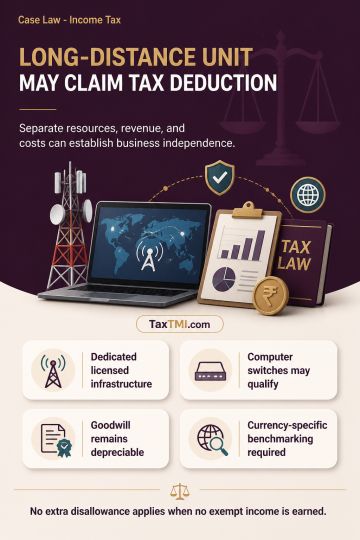
National long-distance undertaking status supports deduction where separately licensed infrastructure, resources, revenue, and expenditure establish c...
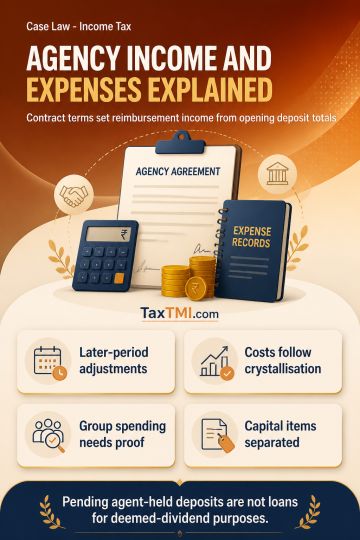
Agency reimbursement income follows contractual deposit-liability computation, while pending deposit collections do not constitute deemed-dividend loa...
The HC held that cancellation of GST registration under Section 29(2)(c) for non-filing of returns for six continuous months is valid. However, per the proviso to sub-rule (4) of Rule 22 of the CGST Rules, 2017, if the petitioner is willing to furnish all pending returns and pay the due tax along with interest and late fees, the empowered officer may drop the cancellation proceedings and restore the registration by passing an order in Form GST REG-20. The court disposed of the writ petition directing the petitioner to approach the competent authority within two months to seek restoration of GST registration by complying with the statutory requirements.
The HC held that cancellation of GST registration under Section 29(2)(c) for non-filing of returns for six continuous months is valid. However, per the proviso to sub-rule (4) of Rule 22 of the CGST Rules, 2017, if the petitioner is willing to furnish all pending returns and pay the due tax along with interest and late fees, the empowered officer may drop the cancellation proceedings and restore the registration by passing an order in Form GST REG-20. The court disposed of the writ petition directing the petitioner to approach the competent authority within two months to seek restoration of GST registration by complying with the statutory requirements.
Note: It is a system-generated summary and is for quick reference only.
 TaxTMI
  TaxTMI
 of 4894