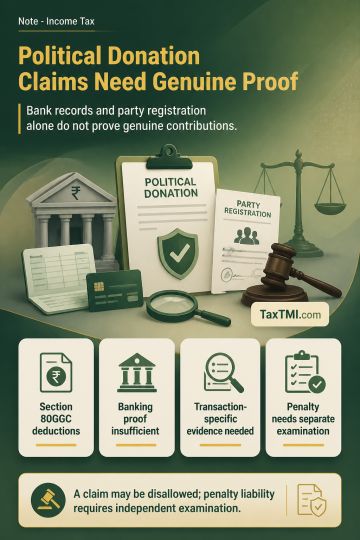
Political contribution deductions require genuine transactions; banking records and party registration alone cannot defeat evidence of accommodation e...
Post-death GST liability permits fresh proceedings against legal representatives, while discontinued-business recovery remains limited to the inherite...
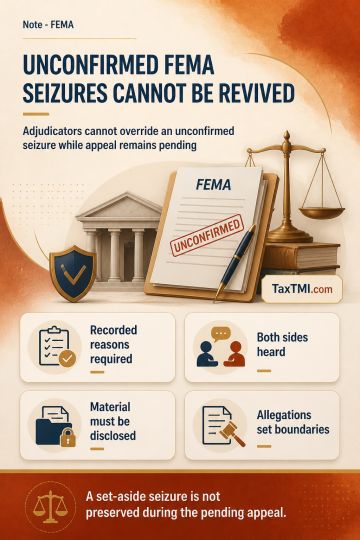
Non-confirmation of FEMA seizure prevents adjudicators from overriding pending appellate findings on recorded reasons and suspected foreign asset hold...
The HC held that the restriction imposed by the Respondents on transferring un-utilized ITC post-merger/amalgamation under Section 18(3) CGST Act, 2017, based on differing States/UTs of transferor and transferee, is not supported by the statutory scheme. The Court clarified that the CGST Act prescribes specific timelines for ITC claims and permits transfer of ITC to a new entity arising from amalgamation or merger without imposing a same-State requirement. Legislative intent must be ascertained from the statute's language without adding or substituting words. Consequently, the Petitioner, a new entity formed by amalgamation, is entitled to the transfer of ITC from the transferor company despite differing States. The petition was allowed, directing the Respondents to enable ITC transfer accordingly.
The HC held that the restriction imposed by the Respondents on transferring un-utilized ITC post-merger/amalgamation under Section 18(3) CGST Act, 2017, based on differing States/UTs of transferor and transferee, is not supported by the statutory scheme. The Court clarified that the CGST Act prescribes specific timelines for ITC claims and permits transfer of ITC to a new entity arising from amalgamation or merger without imposing a same-State requirement. Legislative intent must be ascertained from the statute's language without adding or substituting words. Consequently, the Petitioner, a new entity formed by amalgamation, is entitled to the transfer of ITC from the transferor company despite differing States. The petition was allowed, directing the Respondents to enable ITC transfer accordingly.
Note: It is a system-generated summary and is for quick reference only.
 TaxTMI
  TaxTMI
 of 4918