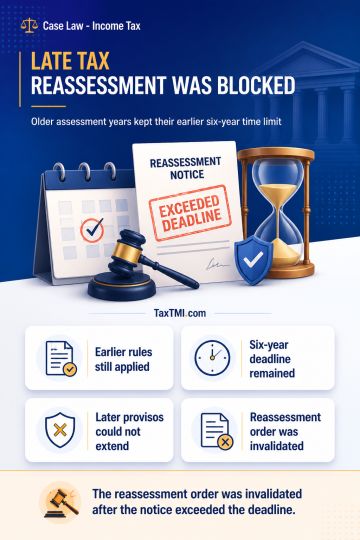
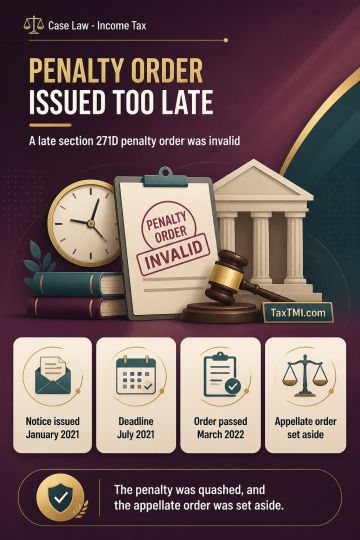
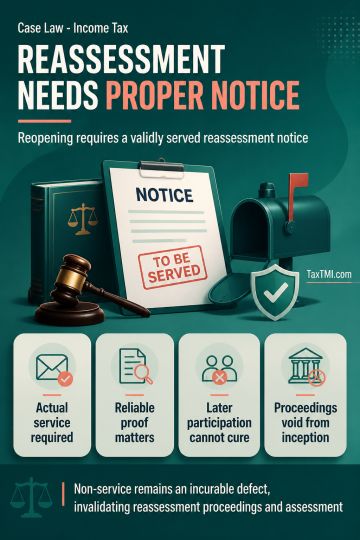
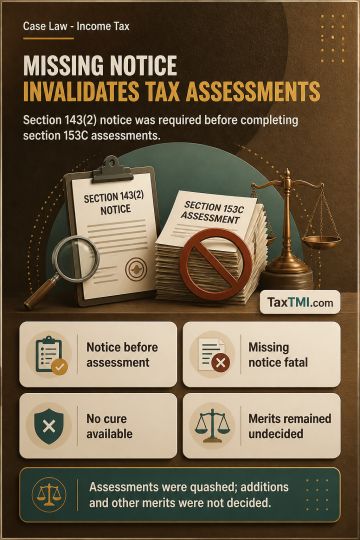
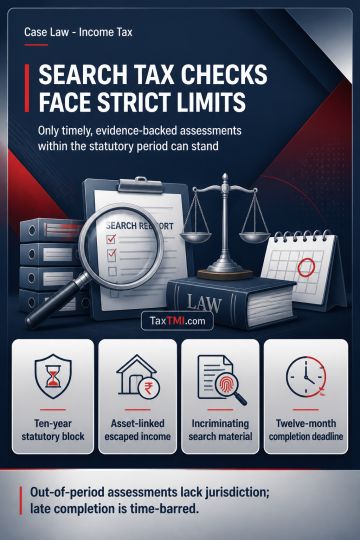
Pre-amendment reassessment limitation bars late notices under the preserved regime, invalidating consequential reassessment for affected earlier asses...
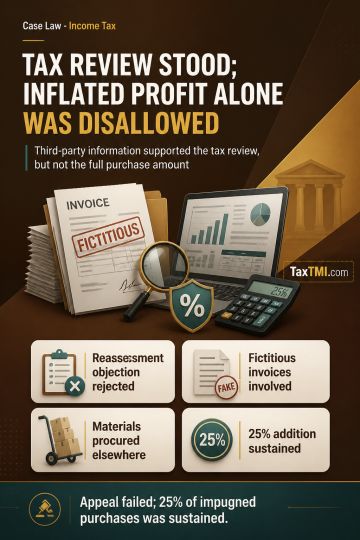
Cash-sales explanations for bank deposits require documentary reconciliation; reassessment notice survived where effective response time was available...
Functional comparability in transfer pricing prevents ad hoc arm's length adjustments where functions, assets, risks and reliable comparables are unes...
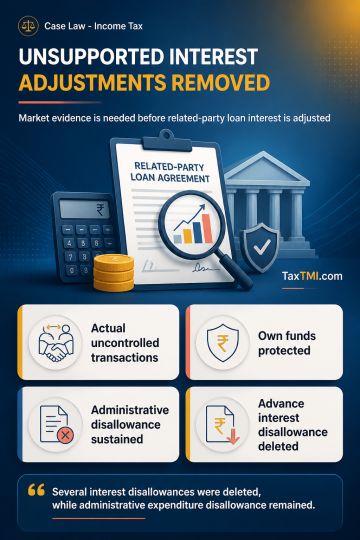
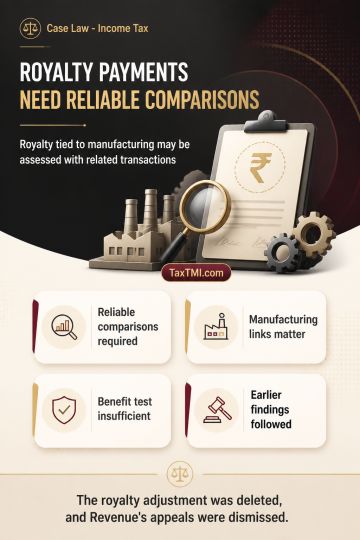
Contingency expenses, exempt-income disallowance, and royalty benchmarking: unsupported adjustments were deleted under consistent accounting and trans...
Page of 4920
Press 'Enter' after typing page number.
61 to 80 of 98394 Results
❮
❯
❯❯
0 / 200
Expand Note
Add to Folder
No Folders have been created
+
Are you sure you want to delete "My most important" ?
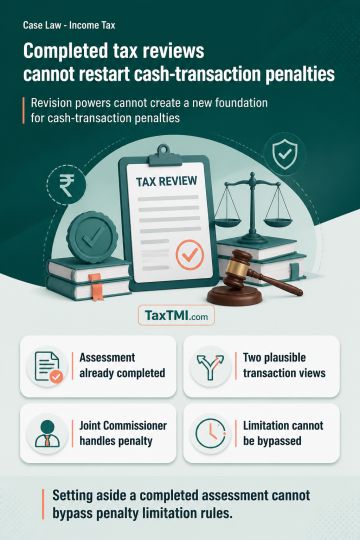
The ITAT held that revision under section 263 is not warranted where the Assessing Officer (AO) has conducted a detailed enquiry, even if such enquiry is deemed inadequate, distinguishing it from a complete lack of enquiry. The Tribunal emphasized that revisionary jurisdiction under section 263 arises only if the assessment order is both erroneous and prejudicial to the revenue, and the AO's view is unsustainable in law. Since the AO raised queries during assessment, which the assessee responded to and which were accepted, the PCIT was unjustified in invoking section 263. The impugned revision order was set aside as the AO had taken a plausible view on the facts, and a second opinion cannot be substituted under section 263. The appeal filed by the assessee was allowed accordingly.
The ITAT held that revision under section 263 is not warranted where the Assessing Officer (AO) has conducted a detailed enquiry, even if such enquiry is deemed inadequate, distinguishing it from a complete lack of enquiry. The Tribunal emphasized that revisionary jurisdiction under section 263 arises only if the assessment order is both erroneous and prejudicial to the revenue, and the AO's view is unsustainable in law. Since the AO raised queries during assessment, which the assessee responded to and which were accepted, the PCIT was unjustified in invoking section 263. The impugned revision order was set aside as the AO had taken a plausible view on the facts, and a second opinion cannot be substituted under section 263. The appeal filed by the assessee was allowed accordingly.
Note: It is a system-generated summary and is for quick reference only.
 TaxTMI
 TaxTMI

 of 4920