Mandatory textile export qualifiers distinguish flame-retardant fabrics from other listed fabrics for automated identification under the textiles ince...
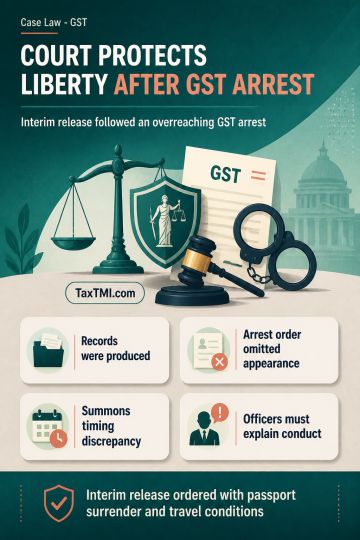
Personal liberty safeguards restrict arrest after court-directed GST appearance, requiring interim release where authorities overreach pending proceed...
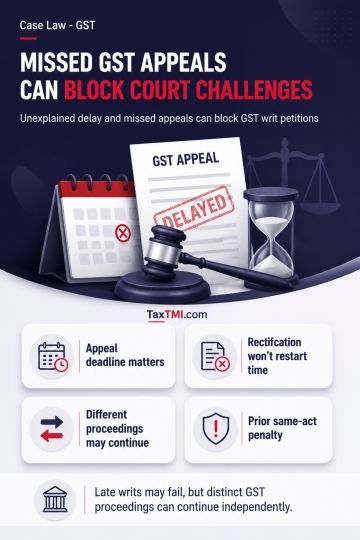
Alternative statutory remedy and delay bar GST writ challenges despite pending rectification, while distinct subject matter permits parallel proceedin...
Page of 4884
Press 'Enter' after typing page number.
261 to 280 of 97661 Results
❮
❯
❯❯
0 / 200
Expand Note
Add to Folder
No Folders have been created
+
Are you sure you want to delete "My most important" ?
The HC held that an order dismissing a rectification application under Section 161 of the TNGST Act, 2017, is an adverse decision but does not constitute rectification requiring adherence to natural justice principles. The third proviso to Section 161 applies only when a positive rectification is made that affects a person. If the rectification petition is dismissed without alteration of the original order, no rectification occurs, and thus, the principles of natural justice, including the right to a personal hearing, are not triggered. The Court affirmed that refusal to rectify is not equivalent to rectification under the statute. Consequently, there is no statutory obligation to grant a hearing before dismissing a rectification petition. The Single Judge's order dismissing the appeal was upheld.
The HC held that an order dismissing a rectification application under Section 161 of the TNGST Act, 2017, is an adverse decision but does not constitute rectification requiring adherence to natural justice principles. The third proviso to Section 161 applies only when a positive rectification is made that affects a person. If the rectification petition is dismissed without alteration of the original order, no rectification occurs, and thus, the principles of natural justice, including the right to a personal hearing, are not triggered. The Court affirmed that refusal to rectify is not equivalent to rectification under the statute. Consequently, there is no statutory obligation to grant a hearing before dismissing a rectification petition. The Single Judge's order dismissing the appeal was upheld.
Note: It is a system-generated summary and is for quick reference only.
 TaxTMI
  TaxTMI
 of 4884