Pre-amendment reassessment limitation bars late notices under the preserved regime, invalidating consequential reassessment for affected earlier asses...
Cash-sales explanations for bank deposits require documentary reconciliation; reassessment notice survived where effective response time was available...
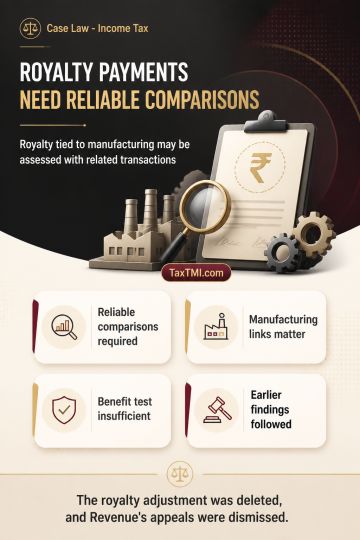
Functional comparability in transfer pricing prevents ad hoc arm's length adjustments where functions, assets, risks and reliable comparables are unes...
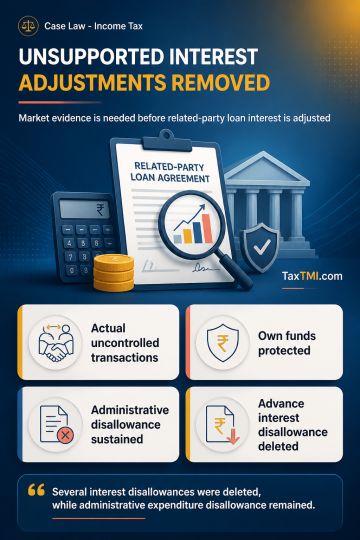
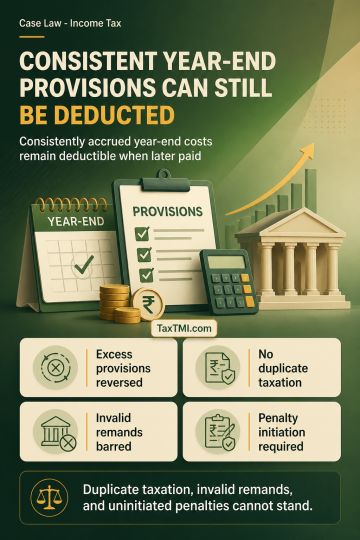
Contingency expenses, exempt-income disallowance, and royalty benchmarking: unsupported adjustments were deleted under consistent accounting and trans...
The ITAT reversed the CIT(A)'s deletion of additions under section 68, holding that the assessee failed to establish the identity, creditworthiness, and genuineness of share application receipts. The tribunal rejected the conduit company theory and found no credible evidence of an agency or commission arrangement. It emphasized that mere denial or attribution to a third-party entry operator does not discharge the assessee's burden to explain unexplained credits. Given the absence of financial capacity in investors, contrived fund flows, and lack of business rationale, the unexplained amounts were rightly treated as income. The AO's addition was restored, and the Revenue's appeal was allowed in full, affirming that unexplained credits must be treated as income unless satisfactorily explained by the assessee.
The ITAT reversed the CIT(A)'s deletion of additions under section 68, holding that the assessee failed to establish the identity, creditworthiness, and genuineness of share application receipts. The tribunal rejected the conduit company theory and found no credible evidence of an agency or commission arrangement. It emphasized that mere denial or attribution to a third-party entry operator does not discharge the assessee's burden to explain unexplained credits. Given the absence of financial capacity in investors, contrived fund flows, and lack of business rationale, the unexplained amounts were rightly treated as income. The AO's addition was restored, and the Revenue's appeal was allowed in full, affirming that unexplained credits must be treated as income unless satisfactorily explained by the assessee.
Note: It is a system-generated summary and is for quick reference only.
 TaxTMI
 TaxTMI

 of 4918