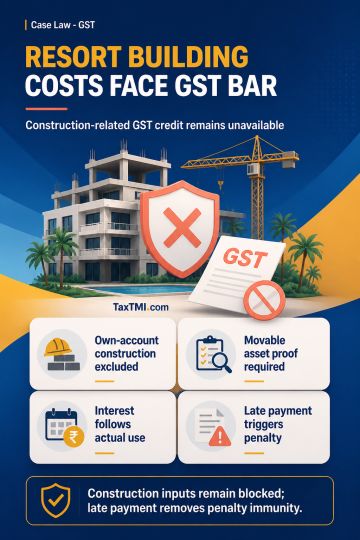
Blocked input tax credit for resort construction remains unavailable; interest follows actual utilisation, while delayed payment attracts statutory pe...
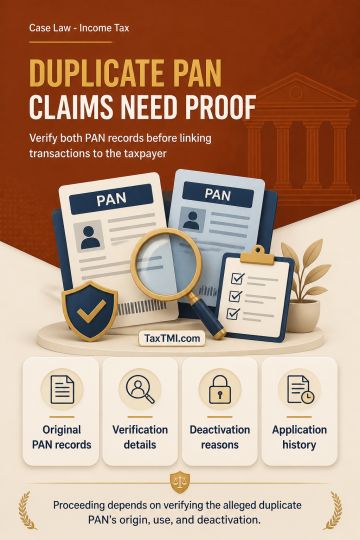
Duplicate PAN allocation requires record verification and deactivation reasons before assessment-related transactions can be attributed to an assessee...
Faceless assessment safeguards require requested personal hearings and adequate final show-cause response time, failing which reassessment is required...
The HC held that the refund of input tax credit is limited to the tax rate applicable on the principal input, specifically crude sunflower oil. Relying on precedent, the Court affirmed that Circular No. 135/05/2020 applies only where input tax credit accumulation arises from a reduction in tax rates. The Court further concluded that the petitioner is not entitled to a refund under Clause (ii) of Sub-section (3) of Section 54 when the input and output supplies are identical. This interpretation aligns with the legal principles established in a prior HC ruling involving a similar issue. Consequently, the petition was allowed, confirming that refund claims must adhere strictly to the statutory and circular provisions governing input tax credit refunds.
The HC held that the refund of input tax credit is limited to the tax rate applicable on the principal input, specifically crude sunflower oil. Relying on precedent, the Court affirmed that Circular No. 135/05/2020 applies only where input tax credit accumulation arises from a reduction in tax rates. The Court further concluded that the petitioner is not entitled to a refund under Clause (ii) of Sub-section (3) of Section 54 when the input and output supplies are identical. This interpretation aligns with the legal principles established in a prior HC ruling involving a similar issue. Consequently, the petition was allowed, confirming that refund claims must adhere strictly to the statutory and circular provisions governing input tax credit refunds.
Note: It is a system-generated summary and is for quick reference only.
 TaxTMI
  TaxTMI
 of 4886