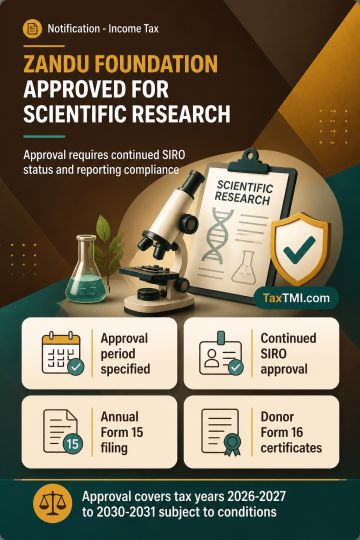
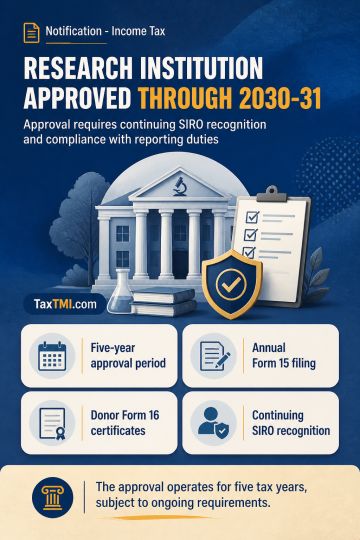
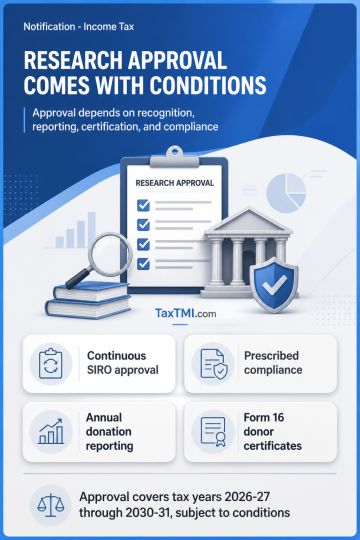
Scientific research association approval requires continuing SIRO status, annual donation reporting, and donor certificates for the approved foundatio...
Scientific research institution approval is conditional on SIRO recognition, annual donation reporting, donor certification, and prescribed compliance...
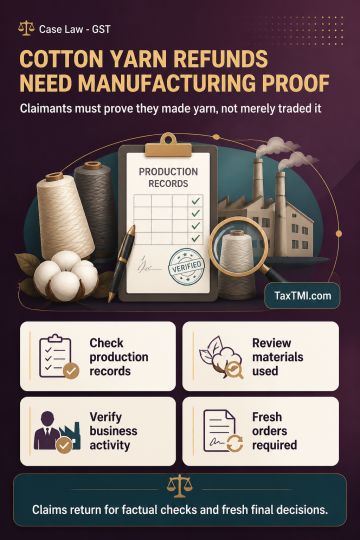
The ITAT held that the lease/rental income of the assessee company constitutes business income, as leasing the property is a principal object and the sole source of income, contrary to the assessee's return characterizing it as income from house property. The Tribunal rejected the argument based on the rule of consistency, emphasizing that a claim inconsistent with admitted facts and settled law cannot be perpetuated merely due to non-disturbance by the AO. Consequently, the CIT(A)'s order was set aside, and the AO's order restored. Regarding the disallowance of expenses related to the lease income, the matter was remanded to the CIT(A) for adjudication on merits, since the CIT(A) had not addressed this issue after altering the income classification.
The ITAT held that the lease/rental income of the assessee company constitutes business income, as leasing the property is a principal object and the sole source of income, contrary to the assessee's return characterizing it as income from house property. The Tribunal rejected the argument based on the rule of consistency, emphasizing that a claim inconsistent with admitted facts and settled law cannot be perpetuated merely due to non-disturbance by the AO. Consequently, the CIT(A)'s order was set aside, and the AO's order restored. Regarding the disallowance of expenses related to the lease income, the matter was remanded to the CIT(A) for adjudication on merits, since the CIT(A) had not addressed this issue after altering the income classification.
Note: It is a system-generated summary and is for quick reference only.
 TaxTMI
  TaxTMI
 of 4881