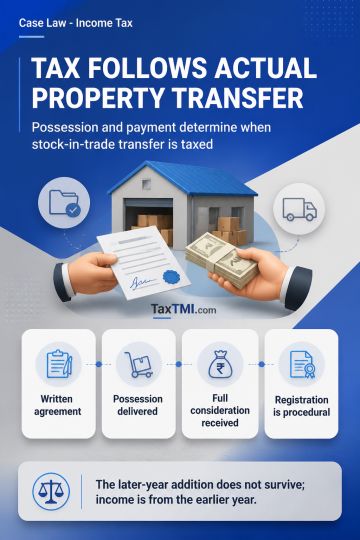
Stock-in-trade transfer taxability follows possession and consideration, not later conveyance registration, limiting deemed-value provisions to the ac...
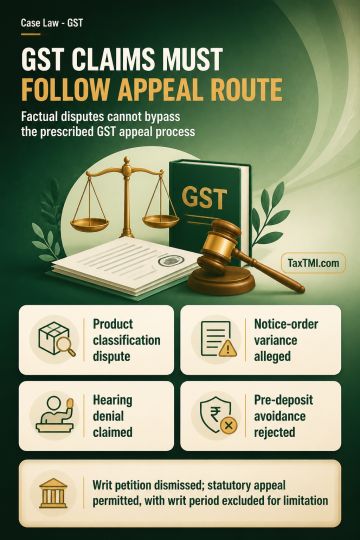
Alternative statutory remedy under GST bars writ challenge where classification, notice variance, and hearing disputes require factual appellate revie...
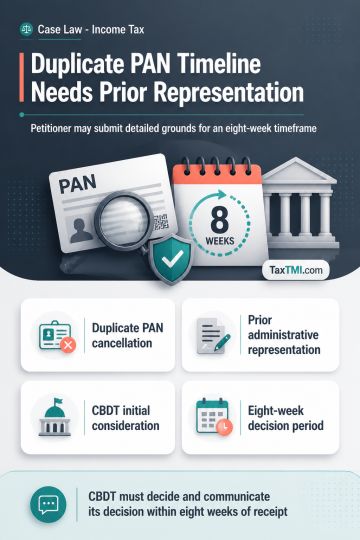
Duplicate PAN cancellation timeframe requires prior administrative representation before judicial intervention, ensuring a time-bound decision on the ...
The Appellate Tribunal held that the limitation period for filing the appeal commenced on the date the impugned order was pronounced, with a 30-day limitation period and an additional 15-day extension under Section 14 of the Limitation Act, 1963. The appellant's delay of 117 days far exceeded the permissible period, and the Tribunal found the appellant's conduct reckless and lacking bona fides or due diligence. Consequently, the appellant was not entitled to the benefit of condonation under Section 14. Furthermore, relying on binding precedent, the Tribunal reaffirmed its lack of jurisdiction to condone delay beyond 15 days. Accordingly, the appeal was dismissed for being barred by limitation.
The Appellate Tribunal held that the limitation period for filing the appeal commenced on the date the impugned order was pronounced, with a 30-day limitation period and an additional 15-day extension under Section 14 of the Limitation Act, 1963. The appellant's delay of 117 days far exceeded the permissible period, and the Tribunal found the appellant's conduct reckless and lacking bona fides or due diligence. Consequently, the appellant was not entitled to the benefit of condonation under Section 14. Furthermore, relying on binding precedent, the Tribunal reaffirmed its lack of jurisdiction to condone delay beyond 15 days. Accordingly, the appeal was dismissed for being barred by limitation.
Note: It is a system-generated summary and is for quick reference only.
 TaxTMI
  TaxTMI
 of 4888