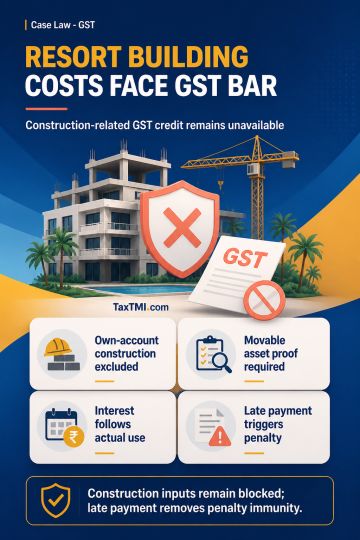
Blocked input tax credit for resort construction remains unavailable; interest follows actual utilisation, while delayed payment attracts statutory pe...
Duplicate PAN allocation requires record verification and deactivation reasons before assessment-related transactions can be attributed to an assessee...
Faceless assessment safeguards require requested personal hearings and adequate final show-cause response time, failing which reassessment is required...
Page of 4891
Press 'Enter' after typing page number.
201 to 220 of 97820 Results
❮
❯
❯❯
0 / 200
Expand Note
Add to Folder
No Folders have been created
+
Are you sure you want to delete "My most important" ?
The AT held that civil courts and the tribunal lack jurisdiction to determine cultivation rights, which fall exclusively within the revenue courts' purview. The appellants had transferred cultivation rights via sub-leases to third parties, thereby forfeiting any right to repossess those rights. Additionally, as the appellants were not recorded owners in revenue records, they possessed no authority to evict the sub-lessees for alleged breaches under the Tamil Nadu Cultivating Tenants (Payment of Fair Rent) Act, 1956. Consequently, the appellants lacked locus standi to challenge the sub-lessees' rights. The appeals were dismissed on these grounds.
The AT held that civil courts and the tribunal lack jurisdiction to determine cultivation rights, which fall exclusively within the revenue courts' purview. The appellants had transferred cultivation rights via sub-leases to third parties, thereby forfeiting any right to repossess those rights. Additionally, as the appellants were not recorded owners in revenue records, they possessed no authority to evict the sub-lessees for alleged breaches under the Tamil Nadu Cultivating Tenants (Payment of Fair Rent) Act, 1956. Consequently, the appellants lacked locus standi to challenge the sub-lessees' rights. The appeals were dismissed on these grounds.
Note: It is a system-generated summary and is for quick reference only.
 TaxTMI
  TaxTMI
 of 4891