Opportunity to furnish unsecured-loan confirmations is required before reassessment initiation; proceedings require fresh consideration after taxpayer...
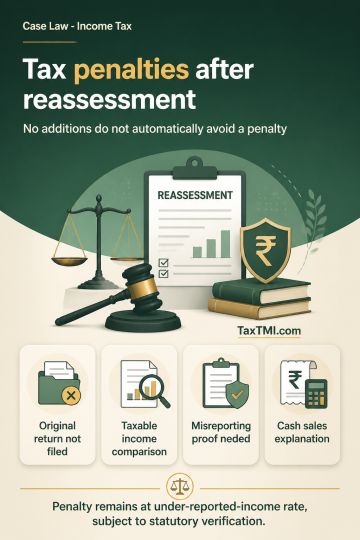
Under-reporting on a first reassessment return attracts penalty, while enhanced misreporting penalty requires proof of a statutory misreporting catego...
The AT dismissed the appeal challenging the provisional attachment of 20 immovable properties under the PML Act, concluding the appellant operated a Ponzi scheme through multiple entities, initially paying returns from new investors' funds before collapsing. The tribunal rejected the appellant's contention that incarceration precluded the risk of property dissipation, noting the appellant's ability to act via associates or power of attorney to frustrate proceedings. The attachment was upheld as an intermediate measure to preserve the properties for potential confiscation upon conviction, without affecting possession unless exceptional circumstances arise. The AT found no error in the Adjudicating Authority's confirmation of the attachment order, thereby affirming the restraint on the properties pending trial.
The AT dismissed the appeal challenging the provisional attachment of 20 immovable properties under the PML Act, concluding the appellant operated a Ponzi scheme through multiple entities, initially paying returns from new investors' funds before collapsing. The tribunal rejected the appellant's contention that incarceration precluded the risk of property dissipation, noting the appellant's ability to act via associates or power of attorney to frustrate proceedings. The attachment was upheld as an intermediate measure to preserve the properties for potential confiscation upon conviction, without affecting possession unless exceptional circumstances arise. The AT found no error in the Adjudicating Authority's confirmation of the attachment order, thereby affirming the restraint on the properties pending trial.
Note: It is a system-generated summary and is for quick reference only.
 TaxTMI
  TaxTMI
 of 4916