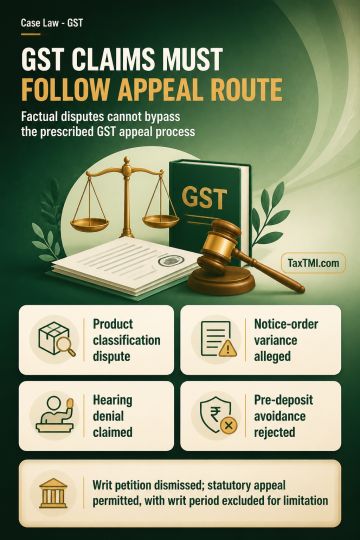
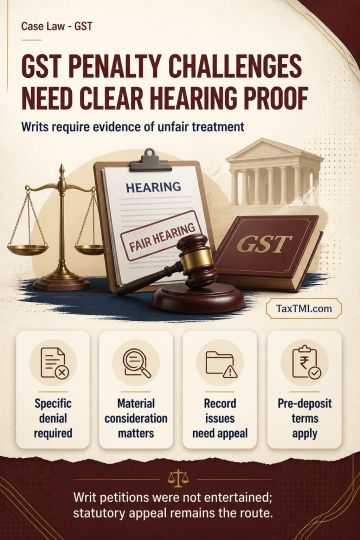
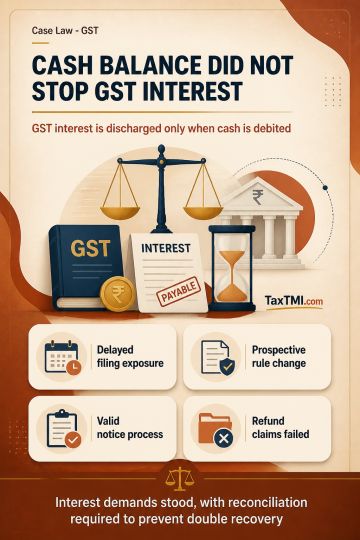
Alternative statutory remedy under GST bars writ challenge where classification, notice variance, and hearing disputes require factual appellate revie...
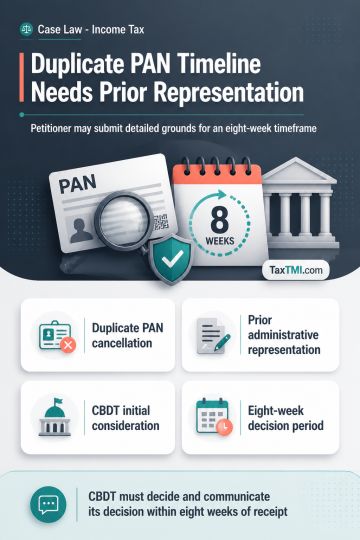
Duplicate PAN cancellation timeframe requires prior administrative representation before judicial intervention, ensuring a time-bound decision on the ...
The CESTAT allowed the appeal, holding that where an assessee clears goods both to sister units and independent third-party buyers, the assessable value for related party transfers must be the transaction value, not costing plus profit margin under Rule 8 of the Central Excise Valuation Rules, 2000. The tribunal found the appellant's clearances to unrelated parties substantiated, negating the applicability of cost-based valuation. Additionally, the confirmed demand arising from a debit note lacked corroborative evidence of receipt and was set aside. The demand was also barred by limitation, as the department failed to prove suppression despite timely statutory returns reflecting declared values. Consequently, all confirmed demands, including those based on time limitation grounds, were quashed, affirming the appellant's valuation methodology and negating the department's claims.
The CESTAT allowed the appeal, holding that where an assessee clears goods both to sister units and independent third-party buyers, the assessable value for related party transfers must be the transaction value, not costing plus profit margin under Rule 8 of the Central Excise Valuation Rules, 2000. The tribunal found the appellant's clearances to unrelated parties substantiated, negating the applicability of cost-based valuation. Additionally, the confirmed demand arising from a debit note lacked corroborative evidence of receipt and was set aside. The demand was also barred by limitation, as the department failed to prove suppression despite timely statutory returns reflecting declared values. Consequently, all confirmed demands, including those based on time limitation grounds, were quashed, affirming the appellant's valuation methodology and negating the department's claims.
Note: It is a system-generated summary and is for quick reference only.
 TaxTMI
  TaxTMI
 of 4894