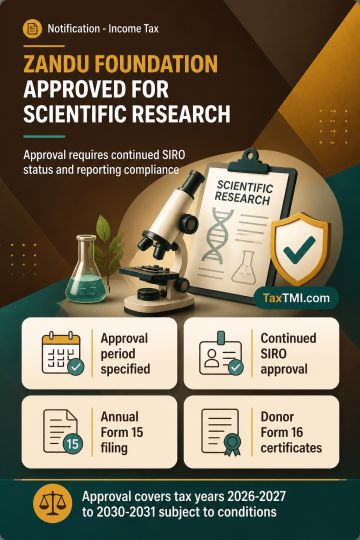
Scientific research association approval requires continuing SIRO status, annual donation reporting, and donor certificates for the approved foundatio...
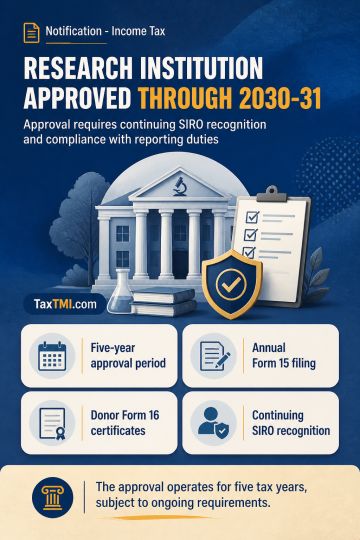
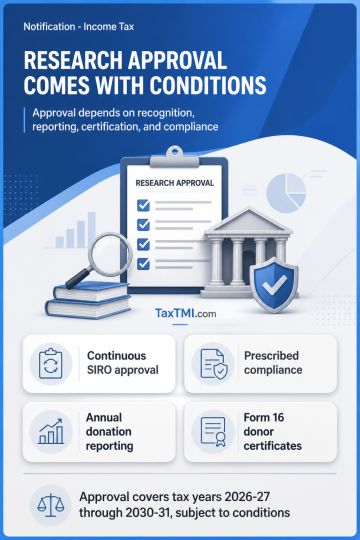
Scientific research institution approval is conditional on SIRO recognition, annual donation reporting, donor certification, and prescribed compliance...
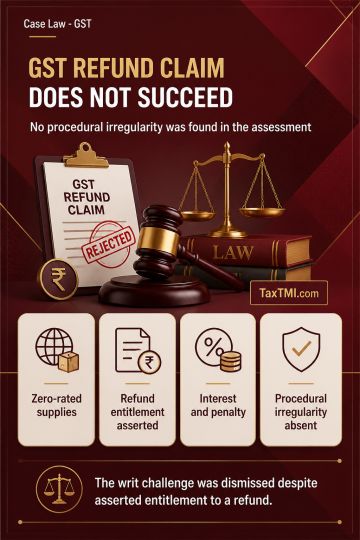
The HC held that under Rule 90(3) of the CGST Rules, deficiency communication via Form GST RFD-03 is mandatory, and the period of deficiency communication is excluded from the two-year limitation under Section 54(1). In the case at hand, the Department claimed issuance of an SCN and rejection without reply, but the petitioner contended non-receipt or non-uploading of the SCN and rejection order, resulting in denial of the right to be heard. Since the final rejection order dated 2019 was only disclosed to the petitioner in 2025, the court allowed the petitioner to file an appeal before the Appellate Authority under Section 107. The Department's inability to produce the deficiency memo (Form GST RFD-03) undermined its justification to withhold the refund. The petition was accordingly disposed of, preserving the petitioner's right to challenge the refund rejection.
The HC held that under Rule 90(3) of the CGST Rules, deficiency communication via Form GST RFD-03 is mandatory, and the period of deficiency communication is excluded from the two-year limitation under Section 54(1). In the case at hand, the Department claimed issuance of an SCN and rejection without reply, but the petitioner contended non-receipt or non-uploading of the SCN and rejection order, resulting in denial of the right to be heard. Since the final rejection order dated 2019 was only disclosed to the petitioner in 2025, the court allowed the petitioner to file an appeal before the Appellate Authority under Section 107. The Department's inability to produce the deficiency memo (Form GST RFD-03) undermined its justification to withhold the refund. The petition was accordingly disposed of, preserving the petitioner's right to challenge the refund rejection.
Note: It is a system-generated summary and is for quick reference only.
 TaxTMI
  TaxTMI
 of 4881