Mandatory textile export qualifiers distinguish flame-retardant fabrics from other listed fabrics for automated identification under the textiles ince...
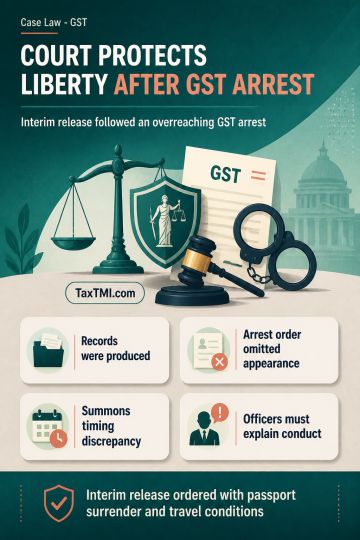
Personal liberty safeguards restrict arrest after court-directed GST appearance, requiring interim release where authorities overreach pending proceed...
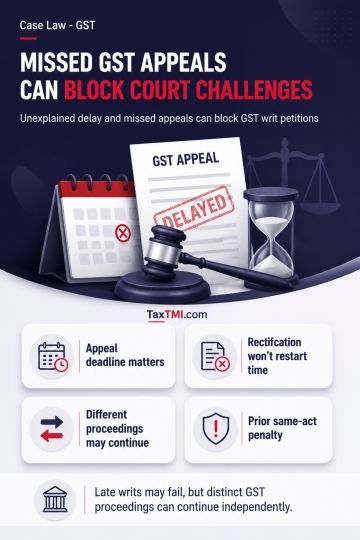
Alternative statutory remedy and delay bar GST writ challenges despite pending rectification, while distinct subject matter permits parallel proceedin...
The ITAT held that the penalty imposed under sections 271D and 271E was invalid as the penalty order was passed beyond the limitation period prescribed under section 275(1)(c). The statute mandates that penalty proceedings must be completed either by the later of two periods: March 31 following the financial year in which the assessment proceedings concluded, or within six months from the end of the month in which the penalty proceedings were initiated. Since the penalty order was passed on January 31, 2024, exceeding the prescribed deadline of June 30, 2023, it was held time-barred. Reliance on precedent confirmed that penalties imposed after the prescribed limitation period are not sustainable. Consequently, the penalty order was quashed, and the appellant's appeal was allowed.
The ITAT held that the penalty imposed under sections 271D and 271E was invalid as the penalty order was passed beyond the limitation period prescribed under section 275(1)(c). The statute mandates that penalty proceedings must be completed either by the later of two periods: March 31 following the financial year in which the assessment proceedings concluded, or within six months from the end of the month in which the penalty proceedings were initiated. Since the penalty order was passed on January 31, 2024, exceeding the prescribed deadline of June 30, 2023, it was held time-barred. Reliance on precedent confirmed that penalties imposed after the prescribed limitation period are not sustainable. Consequently, the penalty order was quashed, and the appellant's appeal was allowed.
Note: It is a system-generated summary and is for quick reference only.
 TaxTMI
  TaxTMI
 of 4881