Infrastructure-development deduction remains available to EPC contractors when substantive statutory conditions outweigh contractor labels in agreemen...
Explained Investment Sources: documented gifts and traceable salary savings supported deletion of additions for property and mutual-fund SIP investmen...
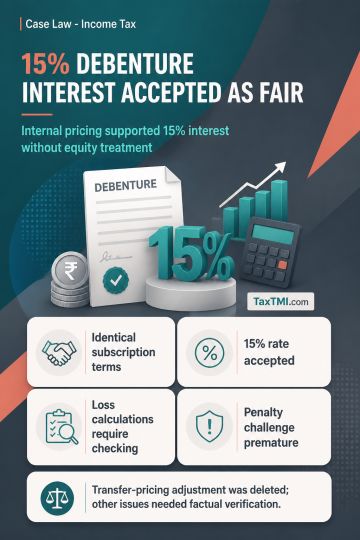
Internal comparable pricing supports arm's-length interest on compulsorily convertible debentures, preventing their recharacterisation as equity for t...
Nominee director protection shields independent financial-institution appointees from criminal liability where they lack involvement in deposit defaul...
The ITAT held that the penalty imposed under sections 271D and 271E was invalid as the penalty order was passed beyond the limitation period prescribed under section 275(1)(c). The statute mandates that penalty proceedings must be completed either by the later of two periods: March 31 following the financial year in which the assessment proceedings concluded, or within six months from the end of the month in which the penalty proceedings were initiated. Since the penalty order was passed on January 31, 2024, exceeding the prescribed deadline of June 30, 2023, it was held time-barred. Reliance on precedent confirmed that penalties imposed after the prescribed limitation period are not sustainable. Consequently, the penalty order was quashed, and the appellant's appeal was allowed.
The ITAT held that the penalty imposed under sections 271D and 271E was invalid as the penalty order was passed beyond the limitation period prescribed under section 275(1)(c). The statute mandates that penalty proceedings must be completed either by the later of two periods: March 31 following the financial year in which the assessment proceedings concluded, or within six months from the end of the month in which the penalty proceedings were initiated. Since the penalty order was passed on January 31, 2024, exceeding the prescribed deadline of June 30, 2023, it was held time-barred. Reliance on precedent confirmed that penalties imposed after the prescribed limitation period are not sustainable. Consequently, the penalty order was quashed, and the appellant's appeal was allowed.
Note: It is a system-generated summary and is for quick reference only.
 TaxTMI
  TaxTMI
 of 4881