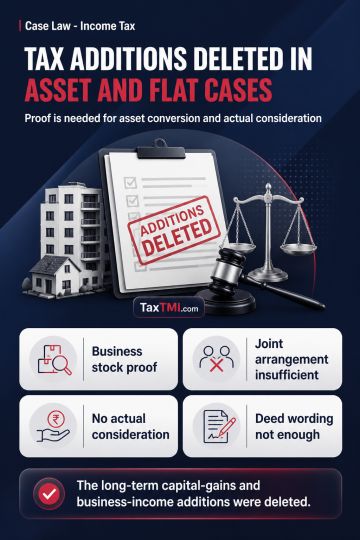
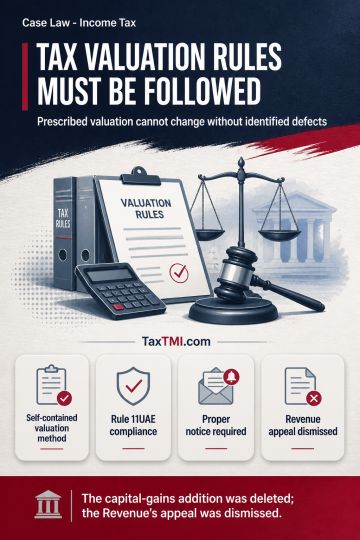
Capital Asset Conversion Requires Proven Business Stock Treatment; Paper Consideration in Spousal Flat Transfers Does Not Create Taxable Business Inco...
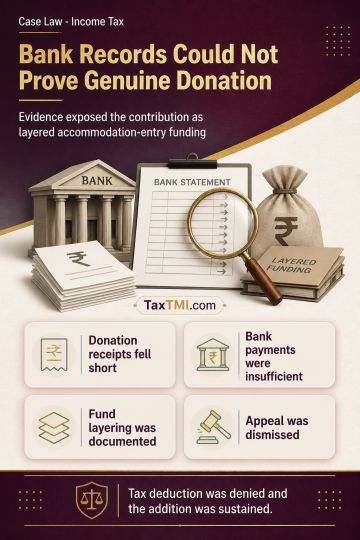
Human-probability test defeats political donation deduction where banking records mask accommodation-entry fund layering and evidence shows non-genuin...
Commercial property status protects capital-gains exemption when residential-house ownership limits are tested, while agricultural-land character gove...
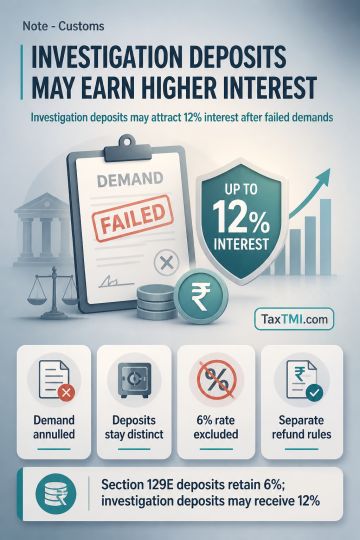
Investigation deposits refunded after failed customs demands fall outside the statutory appellate pre-deposit interest regime and may attract compensa...
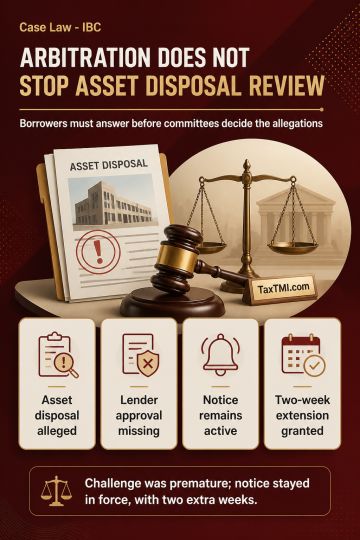
Resolution plan finality extinguishes unquantified operational-creditor claims and pending proceedings unless the approved plan expressly preserves th...
The HC set aside the impugned order rejecting the petitioner's revised TRAN-1 form under Section 140 of the CGST Act, 2017. The court held that the petitioner could not have electronically revised excise returns filed prior to 1 July 2017 after the GST regime commenced, as the excise portal was non-functional post that date. Consequently, the rejection based on the absence of electronic filing was unsustainable. Additionally, the petitioner's manual revision and claim for transitional credit, made within one year as stipulated under the Cenvat Credit Rules, 2004, was valid. The petitioner's prompt notification to GST authorities upon discovering the error further supported entitlement to credit. The HC concluded there was no infirmity in the petitioner's claim, allowing the transition of enhanced credit under GST. The petition was disposed of accordingly.
The HC set aside the impugned order rejecting the petitioner's revised TRAN-1 form under Section 140 of the CGST Act, 2017. The court held that the petitioner could not have electronically revised excise returns filed prior to 1 July 2017 after the GST regime commenced, as the excise portal was non-functional post that date. Consequently, the rejection based on the absence of electronic filing was unsustainable. Additionally, the petitioner's manual revision and claim for transitional credit, made within one year as stipulated under the Cenvat Credit Rules, 2004, was valid. The petitioner's prompt notification to GST authorities upon discovering the error further supported entitlement to credit. The HC concluded there was no infirmity in the petitioner's claim, allowing the transition of enhanced credit under GST. The petition was disposed of accordingly.
Note: It is a system-generated summary and is for quick reference only.
 TaxTMI
  TaxTMI
 of 4891