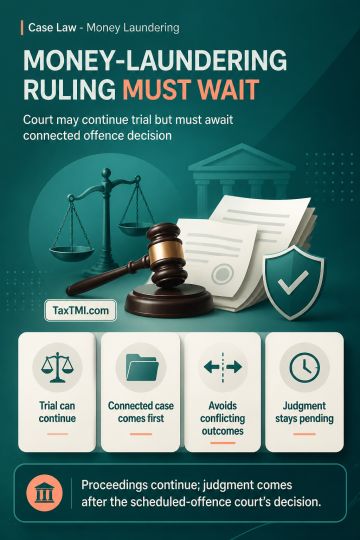
Money-laundering judgment timing requires awaiting the scheduled-offence decision despite continuation of the underlying trial where outcomes directly...
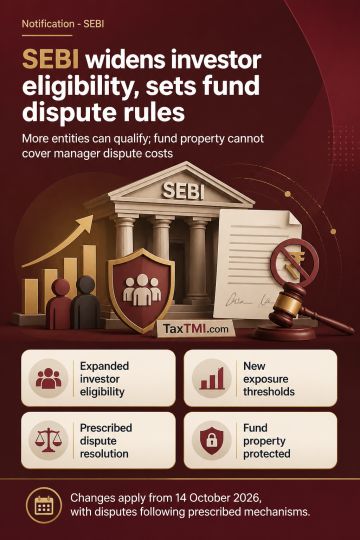
Accredited investor eligibility expands through securities-market exposure, while alternative investment fund disputes require prescribed resolution a...
Customs Assessment Portal centralises classification and valuation guidance to support consistent, transparent and informed compliance across stakehol...
The HC upheld the ITAT's decision affirming the arm's length price (ALP) determination for power supplied by a captive power plant (CPP) to non-eligible units using the internal comparable uncontrolled price (CUP) method. The court emphasized that the assessee's CPP, established primarily for self-consumption and cost savings, differs fundamentally from commercial power generators and State Electricity Boards (SEBs). Consequently, ALP cannot be benchmarked against SEB supply rates to distribution companies. The HC relied on the Electricity Act provisions granting CPPs open access rights and regulatory exemptions, reinforcing that CPP transactions reflect mutually agreed rates distinct from SEB tariffs. The ruling disapproved reliance on external CUPs or precedents inconsistent with current statutory frameworks. The revenue's appeal was dismissed, validating the internal CUP method as the most appropriate, robust, and reliable approach for transfer pricing of CPP power sales under the Income Tax Act and associated rules.
The HC upheld the ITAT's decision affirming the arm's length price (ALP) determination for power supplied by a captive power plant (CPP) to non-eligible units using the internal comparable uncontrolled price (CUP) method. The court emphasized that the assessee's CPP, established primarily for self-consumption and cost savings, differs fundamentally from commercial power generators and State Electricity Boards (SEBs). Consequently, ALP cannot be benchmarked against SEB supply rates to distribution companies. The HC relied on the Electricity Act provisions granting CPPs open access rights and regulatory exemptions, reinforcing that CPP transactions reflect mutually agreed rates distinct from SEB tariffs. The ruling disapproved reliance on external CUPs or precedents inconsistent with current statutory frameworks. The revenue's appeal was dismissed, validating the internal CUP method as the most appropriate, robust, and reliable approach for transfer pricing of CPP power sales under the Income Tax Act and associated rules.
Note: It is a system-generated summary and is for quick reference only.
 TaxTMI
  TaxTMI
 of 4920