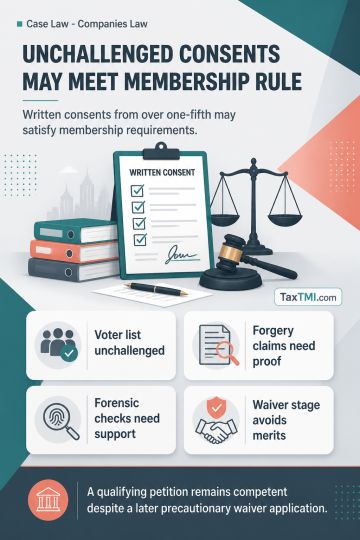
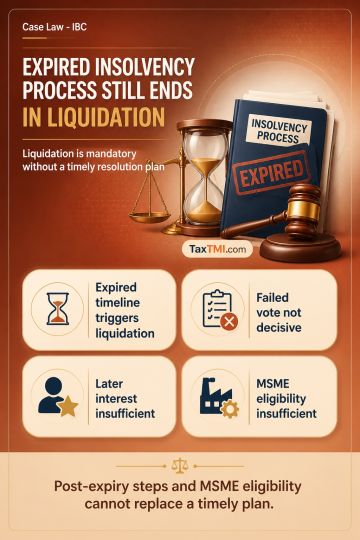
Membership-consent thresholds for oppression petitions are satisfied by unchallenged voter-list consents, while unsupported forgery claims require pro...
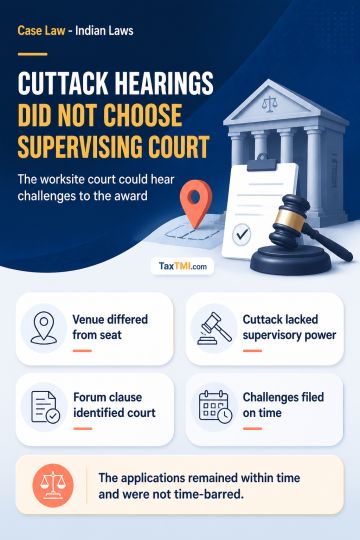
Juridical seat versus arbitral venue determines supervisory court jurisdiction, while timely award challenges remain within the prescribed limitation ...
AAAR set aside the advance ruling regarding classification of tapioca flour and remnants obtained from crushing dried tapioca roots under GST provisions. The appellant-trader failed to provide sufficient documentary evidence from manufacturers regarding the exact manufacturing process, which is crucial for proper tariff classification under Chapter 11 versus Chapter 23. The Authority found that products in Chapter 11 are primarily for food industry use while Chapter 23 covers milling residues for animal feed. Since the appellant could not substantiate claims about the manufacturing process and the lower authority failed to consider complete facts, principles of natural justice were violated. The matter was remanded to the original Authority for fresh consideration with proper opportunity for the appellant to present evidence and be heard in person before determining correct classification and tax liability.
AAAR set aside the advance ruling regarding classification of tapioca flour and remnants obtained from crushing dried tapioca roots under GST provisions. The appellant-trader failed to provide sufficient documentary evidence from manufacturers regarding the exact manufacturing process, which is crucial for proper tariff classification under Chapter 11 versus Chapter 23. The Authority found that products in Chapter 11 are primarily for food industry use while Chapter 23 covers milling residues for animal feed. Since the appellant could not substantiate claims about the manufacturing process and the lower authority failed to consider complete facts, principles of natural justice were violated. The matter was remanded to the original Authority for fresh consideration with proper opportunity for the appellant to present evidence and be heard in person before determining correct classification and tax liability.
Note: It is a system-generated summary and is for quick reference only.
 TaxTMI
  TaxTMI
 of 4897