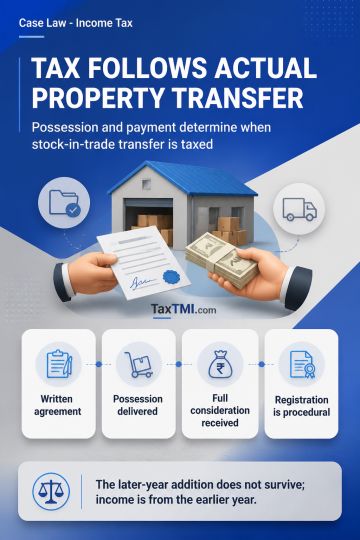
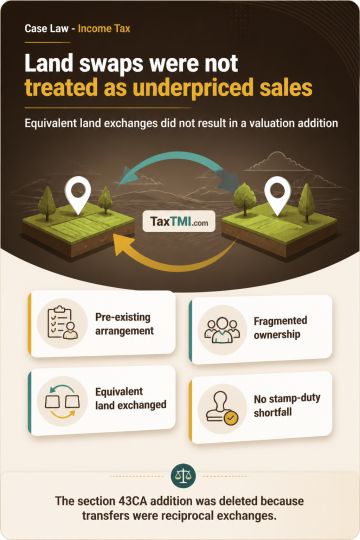
Stock-in-trade transfer taxability follows possession and consideration, not later conveyance registration, limiting deemed-value provisions to the ac...
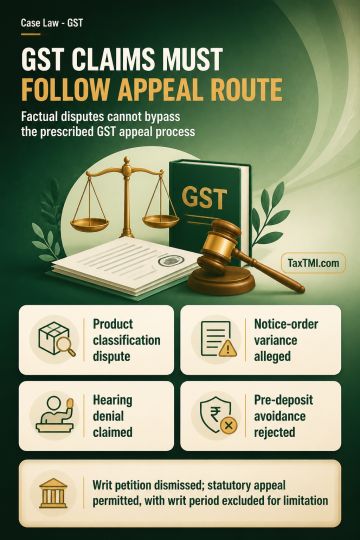
Alternative statutory remedy under GST bars writ challenge where classification, notice variance, and hearing disputes require factual appellate revie...
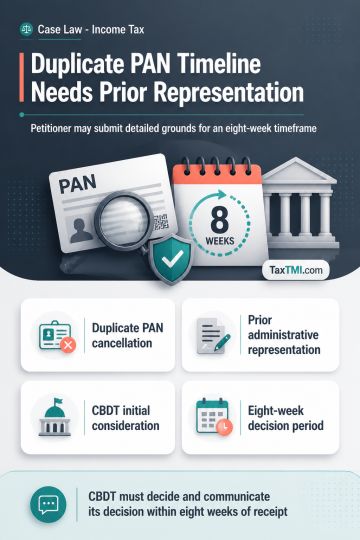
Duplicate PAN cancellation timeframe requires prior administrative representation before judicial intervention, ensuring a time-bound decision on the ...
AAAR held that transportation services provided by appellant to school students and staff do not qualify for GST exemption under Serial No.66 of Notification 12/2017-Central Tax (Rate). The contractual arrangements demonstrated that appellant directly supplied transportation services to students/staff with fees collected from parents, while educational institutions neither provided nor received services in the transaction. The exemption notification requires services to be provided by or to educational institutions, which was not established. AAAR emphasized strict interpretation of exemption notifications with burden of proof on claimant. The ruling distinguished previous AAR decisions as non-binding and factually dissimilar, concluding exemption unavailable under present circumstances.
AAAR held that transportation services provided by appellant to school students and staff do not qualify for GST exemption under Serial No.66 of Notification 12/2017-Central Tax (Rate). The contractual arrangements demonstrated that appellant directly supplied transportation services to students/staff with fees collected from parents, while educational institutions neither provided nor received services in the transaction. The exemption notification requires services to be provided by or to educational institutions, which was not established. AAAR emphasized strict interpretation of exemption notifications with burden of proof on claimant. The ruling distinguished previous AAR decisions as non-binding and factually dissimilar, concluding exemption unavailable under present circumstances.
Note: It is a system-generated summary and is for quick reference only.
 TaxTMI
  TaxTMI
 of 4886