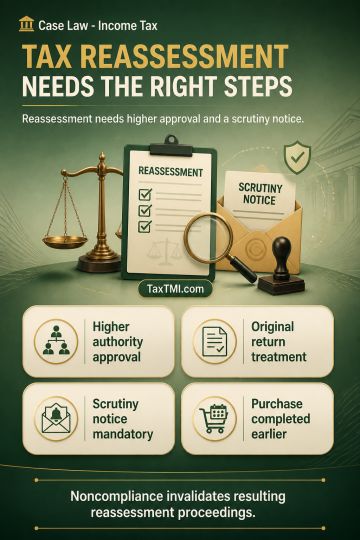
Opportunity to furnish unsecured-loan confirmations is required before reassessment initiation; proceedings require fresh consideration after taxpayer...
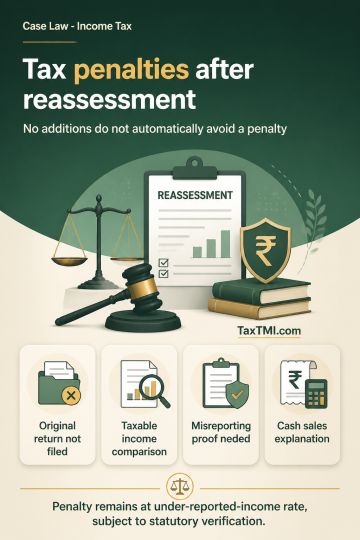
Under-reporting on a first reassessment return attracts penalty, while enhanced misreporting penalty requires proof of a statutory misreporting catego...
ITAT upheld CIT(A)'s deletion of penalty under Section 271(1)(c) for inaccurate particulars regarding Section 54F deduction claim. Assessee had claimed capital gains exemption but later surrendered the deduction when construction could not be completed due to builder's default. Third member ruled that wrong claim of Section 54F deduction cannot constitute "furnishing inaccurate particulars of income" under Section 271(1)(c). ITAT established that tribunals cannot travel beyond facts recorded in lower authorities' orders or introduce new evidence from external sources without confronting the assessee, citing Kishan Chand Chella Ram precedent. Since assessee provided bona fide explanation supported by documentary evidence and disclosed all relevant information during assessment proceedings, penalty was not sustainable. The decision emphasized that mere difference between returned and assessed income does not automatically justify penalty when legitimate explanation exists.
ITAT upheld CIT(A)'s deletion of penalty under Section 271(1)(c) for inaccurate particulars regarding Section 54F deduction claim. Assessee had claimed capital gains exemption but later surrendered the deduction when construction could not be completed due to builder's default. Third member ruled that wrong claim of Section 54F deduction cannot constitute "furnishing inaccurate particulars of income" under Section 271(1)(c). ITAT established that tribunals cannot travel beyond facts recorded in lower authorities' orders or introduce new evidence from external sources without confronting the assessee, citing Kishan Chand Chella Ram precedent. Since assessee provided bona fide explanation supported by documentary evidence and disclosed all relevant information during assessment proceedings, penalty was not sustainable. The decision emphasized that mere difference between returned and assessed income does not automatically justify penalty when legitimate explanation exists.
Note: It is a system-generated summary and is for quick reference only.
 TaxTMI
  TaxTMI
 of 4915