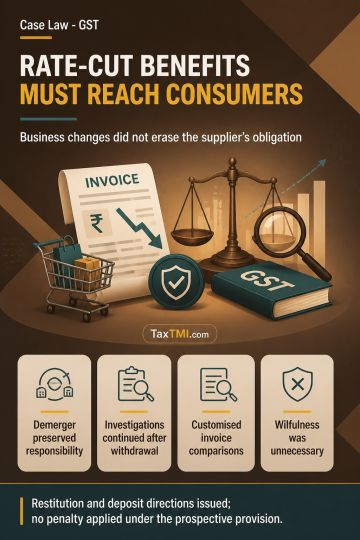
Anti-profiteering obligations survive business demerger, complaint withdrawal, and customized supply arrangements where rate-reduction benefits are no...
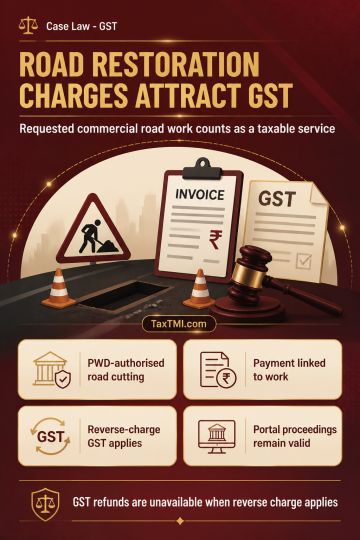
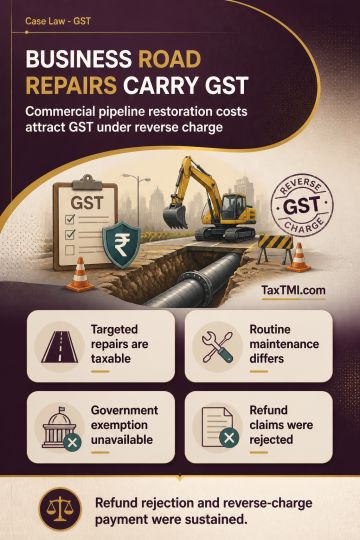
Road restoration charges constitute taxable services when requested for commercial pipeline activity, requiring reverse-charge GST from the business r...
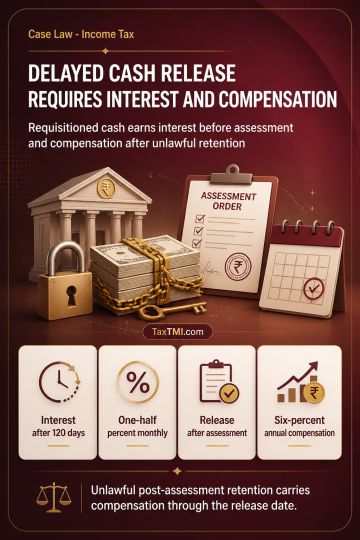
Interest on delayed release of requisitioned cash includes statutory pre-assessment interest and restitutionary compensation for unlawful post-assessm...
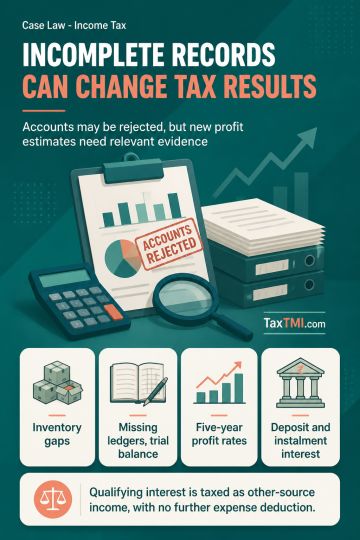
Incomplete inventory records justify rejecting accounts, while profit estimation requires relevant comparable material and interest falls under other ...
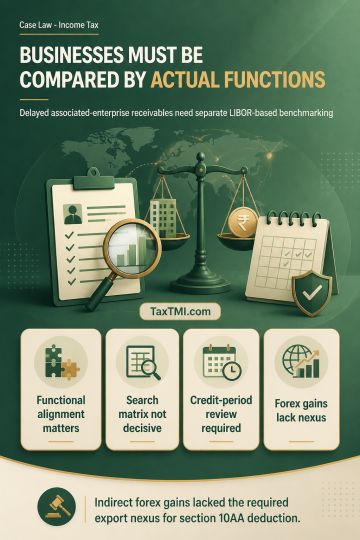
Transfer-pricing comparability requires functional alignment; delayed associated-enterprise receivables need separate LIBOR-based benchmarking, while ...
NCLAT dismissed appeal filed by preference shareholder challenging proceedings under Section 55(3) of Companies Act, 2013. Tribunal held that preference shareholders, being mere investors, lack individually enforceable statutory rights and have no locus standi to approach NCLT or file appeals under Section 421. Relying on Clarion Health Food LLP precedent, NCLAT ruled shareholders are not "aggrieved parties" under the Code and cannot maintain such proceedings. The adjudicating authority's findings contained no legal vices warranting appellate interference. Appeal was dismissed as non-maintainable due to appellant's lack of sustainable and legally enforceable rights in capacity as preference shareholder.
NCLAT dismissed appeal filed by preference shareholder challenging proceedings under Section 55(3) of Companies Act, 2013. Tribunal held that preference shareholders, being mere investors, lack individually enforceable statutory rights and have no locus standi to approach NCLT or file appeals under Section 421. Relying on Clarion Health Food LLP precedent, NCLAT ruled shareholders are not "aggrieved parties" under the Code and cannot maintain such proceedings. The adjudicating authority's findings contained no legal vices warranting appellate interference. Appeal was dismissed as non-maintainable due to appellant's lack of sustainable and legally enforceable rights in capacity as preference shareholder.
Note: It is a system-generated summary and is for quick reference only.
 TaxTMI
 TaxTMI

 of 4918