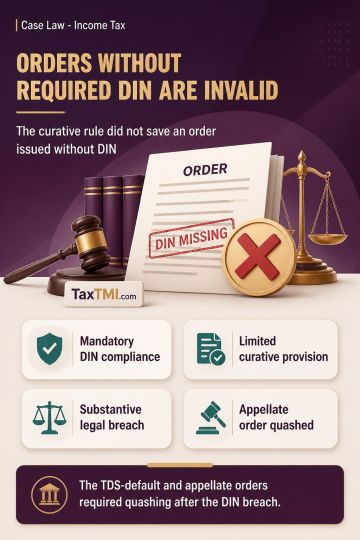
Document Identification Number compliance renders TDS-default orders invalid where mandatory DIN requirements are breached and curative provision does...
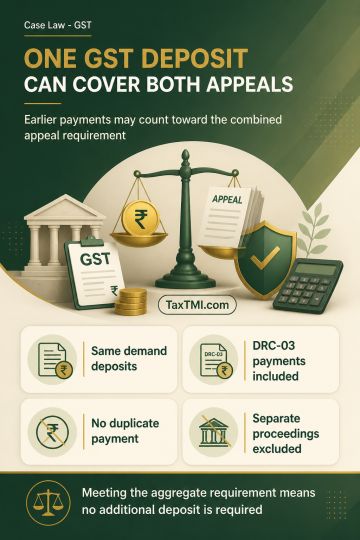
The HC disposed of writ petitions challenging GST assessment orders in Form GST ASMT 14 for assessment years 2017-18, 2019-20, and 2020-21. The petitioner failed to file appeals before ADC (GST) Appeals within the statutory 90-day limitation period. Despite the Supreme Court's position against entertaining writ petitions after limitation expiry, the HC followed its consistent practice of allowing petitioners to file statutory appeals under similar circumstances. The court permitted the petitioner to file statutory appeal within 30 days from receipt of the order, subject to pre-depositing 25% of disputed tax through Electronic Cash Register or demand draft. The writ petitions were disposed of at admission stage with these conditions.
The HC disposed of writ petitions challenging GST assessment orders in Form GST ASMT 14 for assessment years 2017-18, 2019-20, and 2020-21. The petitioner failed to file appeals before ADC (GST) Appeals within the statutory 90-day limitation period. Despite the Supreme Court's position against entertaining writ petitions after limitation expiry, the HC followed its consistent practice of allowing petitioners to file statutory appeals under similar circumstances. The court permitted the petitioner to file statutory appeal within 30 days from receipt of the order, subject to pre-depositing 25% of disputed tax through Electronic Cash Register or demand draft. The writ petitions were disposed of at admission stage with these conditions.
Note: It is a system-generated summary and is for quick reference only.
 TaxTMI
  TaxTMI
 of 4918