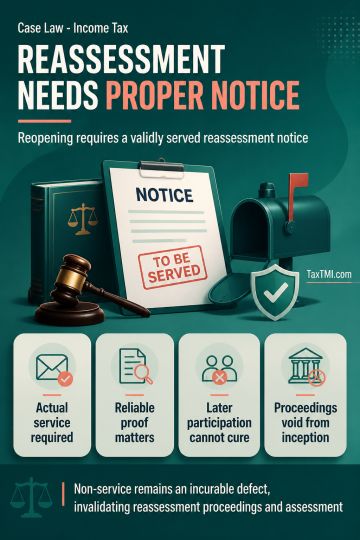
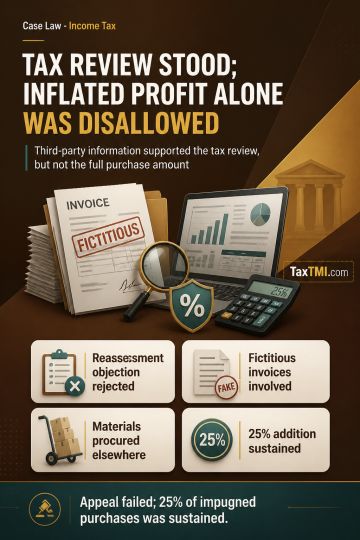
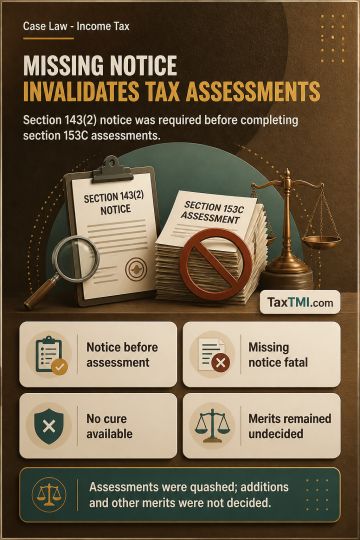
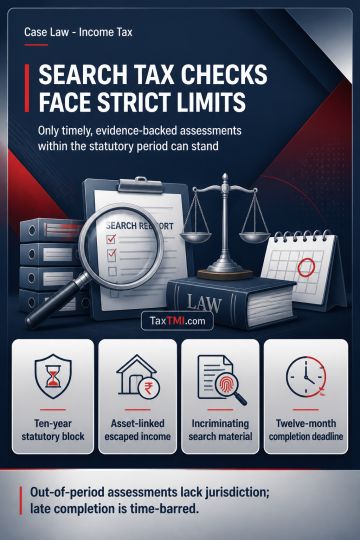
Pre-amendment reassessment limitation bars late notices under the preserved regime, invalidating consequential reassessment for affected earlier asses...
Cash-sales explanations for bank deposits require documentary reconciliation; reassessment notice survived where effective response time was available...
Functional comparability in transfer pricing prevents ad hoc arm's length adjustments where functions, assets, risks and reliable comparables are unes...
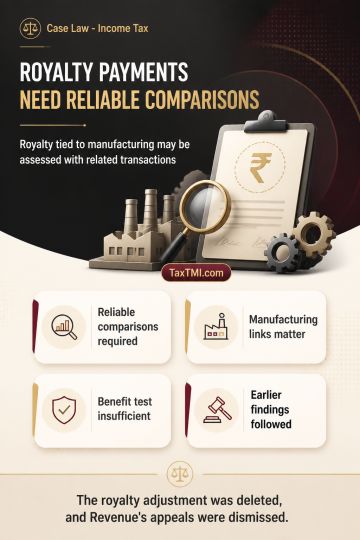
Contingency expenses, exempt-income disallowance, and royalty benchmarking: unsupported adjustments were deleted under consistent accounting and trans...
Page of 4920
Press 'Enter' after typing page number.
61 to 80 of 98394 Results
❮
❯
❯❯
0 / 200
Expand Note
Add to Folder
No Folders have been created
+
Are you sure you want to delete "My most important" ?
The HC dismissed the criminal revision challenging the denial of discharge under Section 245(2) Cr.P.C. for offences under Sections 135(1)(a) and 135(1)(b) of the Customs Act, 1962 involving gold smuggling. The petitioner contended that prosecution relied solely on co-accused confessions and lacked independent incriminating evidence. The HC held that at the charge-framing stage, courts must only consider prima facie sufficiency of grounds without weighing evidence as in trial. The prosecution produced statements under Section 108 of the Customs Act from both accused, which constitute substantive evidence unlike police confessions under Cr.P.C. Combined with witness testimony and documentary evidence, sufficient material existed to frame charges. The discharge petition dismissal was upheld and revision dismissed.
The HC dismissed the criminal revision challenging the denial of discharge under Section 245(2) Cr.P.C. for offences under Sections 135(1)(a) and 135(1)(b) of the Customs Act, 1962 involving gold smuggling. The petitioner contended that prosecution relied solely on co-accused confessions and lacked independent incriminating evidence. The HC held that at the charge-framing stage, courts must only consider prima facie sufficiency of grounds without weighing evidence as in trial. The prosecution produced statements under Section 108 of the Customs Act from both accused, which constitute substantive evidence unlike police confessions under Cr.P.C. Combined with witness testimony and documentary evidence, sufficient material existed to frame charges. The discharge petition dismissal was upheld and revision dismissed.
Note: It is a system-generated summary and is for quick reference only.
 TaxTMI
 TaxTMI

 of 4920