GST refunds for cancelled air tickets remain available when passenger reimbursements defeat unjust enrichment and credit-note adjustment is unavailabl...
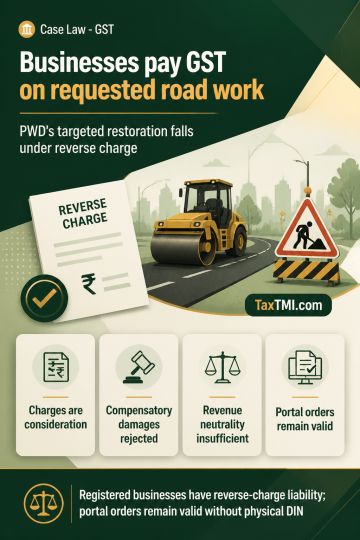
Request-driven road restoration attracts reverse-charge GST, not governmental-function treatment or compensatory-damages status for business recipient...
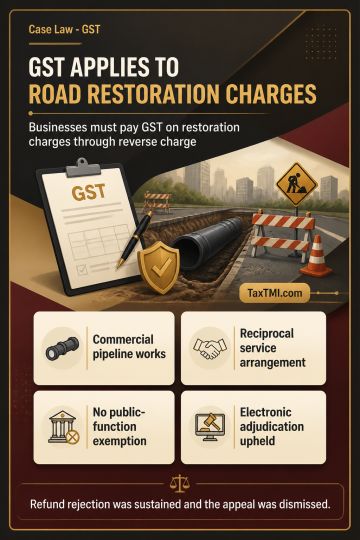
Road restoration charges for commercial pipeline works are taxable Government services, with reverse charge liability and no public-function exemption...
CESTAT dismissed Revenue's appeal regarding additional customs duty on imported mulberry silk fabrics. The Tribunal applied the Supreme Court precedent from AIDEK Tourism Services establishing that actual domestic production of like articles is unnecessary for Section 3 Customs Tariff Act levy determination. The Court held importers must be treated as manufacturers, with duty calculated based on what Indian manufacturers would pay under Excise Act for similar goods. Since exemption notifications applied to like articles if domestically produced, imported mulberry silk fabrics qualified for concessional treatment and were not liable for additional customs duty. The Tribunal sustained lower orders granting exemption benefits to the importer.
CESTAT dismissed Revenue's appeal regarding additional customs duty on imported mulberry silk fabrics. The Tribunal applied the Supreme Court precedent from AIDEK Tourism Services establishing that actual domestic production of like articles is unnecessary for Section 3 Customs Tariff Act levy determination. The Court held importers must be treated as manufacturers, with duty calculated based on what Indian manufacturers would pay under Excise Act for similar goods. Since exemption notifications applied to like articles if domestically produced, imported mulberry silk fabrics qualified for concessional treatment and were not liable for additional customs duty. The Tribunal sustained lower orders granting exemption benefits to the importer.
Note: It is a system-generated summary and is for quick reference only.
 TaxTMI
  TaxTMI
 of 4918