Coercive recovery during GST searches is restrained pending scrutiny, preserving normal business operations and requiring adherence to investigation g...
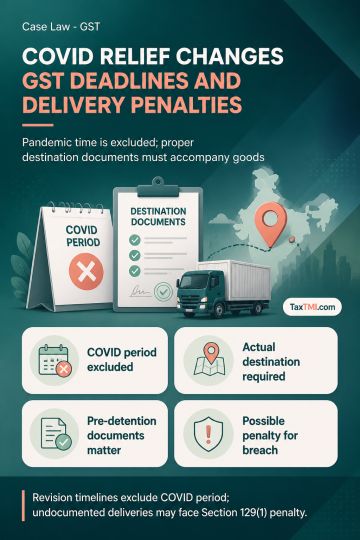
COVID-19 limitation exclusion and destination-specific e-way bills govern revisional timelines and penalties for undocumented third-party plywood deli...
Questions arising from miscellaneous application orders cannot challenge unaltered Tribunal findings, leaving the original order separately challengea...
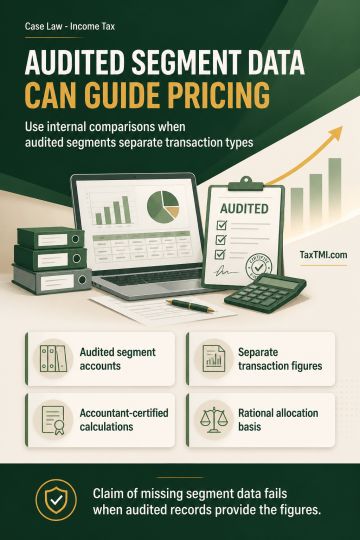
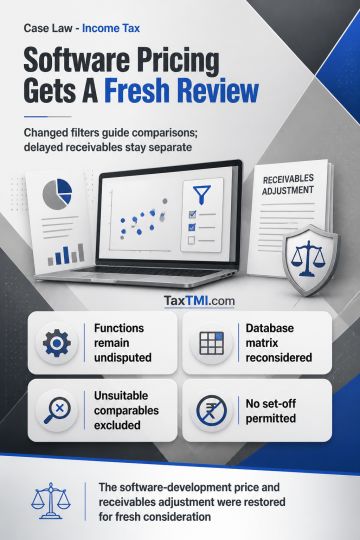
Transfer-pricing comparability filters require fresh arm's-length analysis, while delayed receivables need separate reconsideration with working-capit...
Page of 4896
Press 'Enter' after typing page number.
761 to 780 of 97907 Results
❮
❯
❯❯
0 / 200
Expand Note
Add to Folder
No Folders have been created
+
Are you sure you want to delete "My most important" ?
HC denied bail in tax fraud case involving fraudulent Input Tax Credit (ITC) exceeding Rs. 11.97 crore. Despite petitioners' claims of being permanent residents, the court found substantial evidence of systematic tax evasion under CGST Act Sections 132(1)(b), 132(1)(c), and 132(1)(f). The court emphasized the potential risk to investigation process beyond physical disappearance, noting the ability to manipulate evidence and procedural systems. Given the significant public revenue implications and prima facie documentary evidence of fraudulent practices, the bail applications were dismissed, prioritizing the integrity of the ongoing financial investigation.
HC denied bail in tax fraud case involving fraudulent Input Tax Credit (ITC) exceeding Rs. 11.97 crore. Despite petitioners' claims of being permanent residents, the court found substantial evidence of systematic tax evasion under CGST Act Sections 132(1)(b), 132(1)(c), and 132(1)(f). The court emphasized the potential risk to investigation process beyond physical disappearance, noting the ability to manipulate evidence and procedural systems. Given the significant public revenue implications and prima facie documentary evidence of fraudulent practices, the bail applications were dismissed, prioritizing the integrity of the ongoing financial investigation.
Note: It is a system-generated summary and is for quick reference only.
 TaxTMI
  TaxTMI
 of 4896