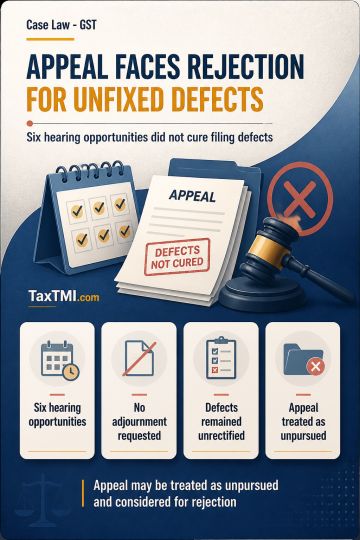
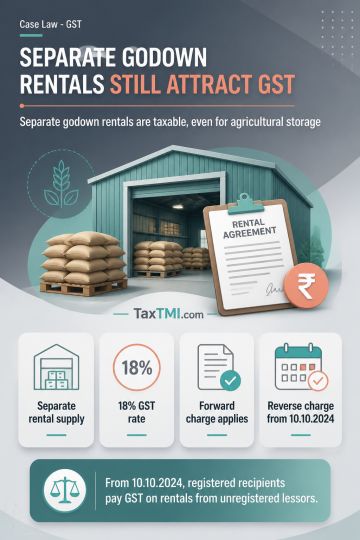
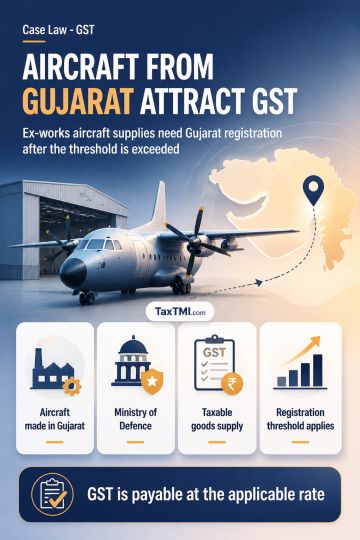
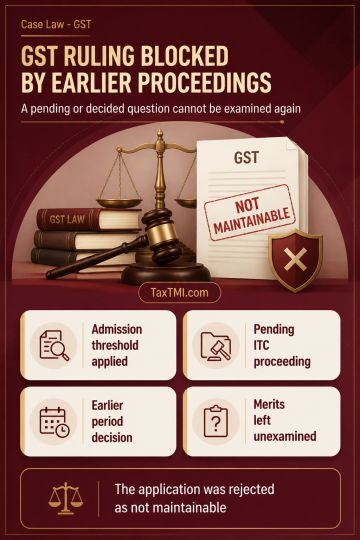
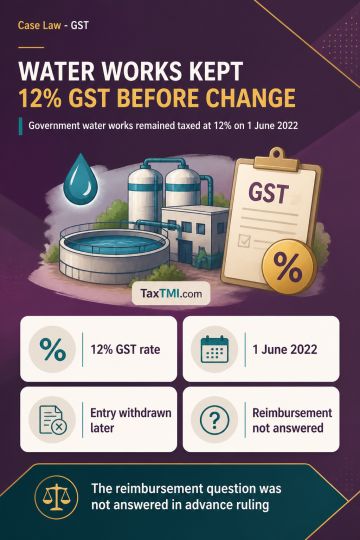
Government water works contract GST concession applied before its withdrawal, while contractual tax reimbursement claims lay outside advance-ruling sc...
Stamp valuation increases after registration-fee payment led to deletion of property-purchase addition within tolerance and without valuation referral...
HC denied bail in tax fraud case involving fraudulent Input Tax Credit (ITC) exceeding Rs. 11.97 crore. Despite petitioners' claims of being permanent residents, the court found substantial evidence of systematic tax evasion under CGST Act Sections 132(1)(b), 132(1)(c), and 132(1)(f). The court emphasized the potential risk to investigation process beyond physical disappearance, noting the ability to manipulate evidence and procedural systems. Given the significant public revenue implications and prima facie documentary evidence of fraudulent practices, the bail applications were dismissed, prioritizing the integrity of the ongoing financial investigation.
HC denied bail in tax fraud case involving fraudulent Input Tax Credit (ITC) exceeding Rs. 11.97 crore. Despite petitioners' claims of being permanent residents, the court found substantial evidence of systematic tax evasion under CGST Act Sections 132(1)(b), 132(1)(c), and 132(1)(f). The court emphasized the potential risk to investigation process beyond physical disappearance, noting the ability to manipulate evidence and procedural systems. Given the significant public revenue implications and prima facie documentary evidence of fraudulent practices, the bail applications were dismissed, prioritizing the integrity of the ongoing financial investigation.
Note: It is a system-generated summary and is for quick reference only.
 TaxTMI
  TaxTMI
 of 4886