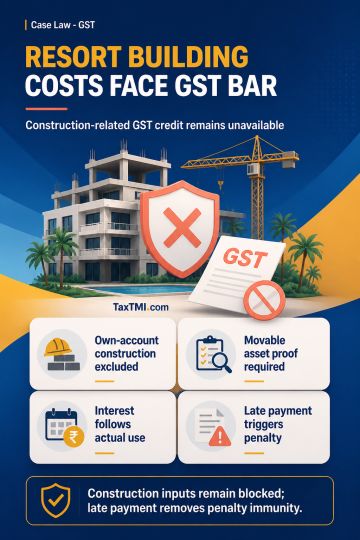
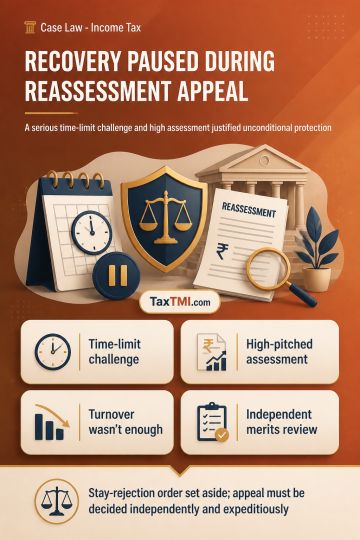
Blocked input tax credit for resort construction remains unavailable; interest follows actual utilisation, while delayed payment attracts statutory pe...
Duplicate PAN allocation requires record verification and deactivation reasons before assessment-related transactions can be attributed to an assessee...
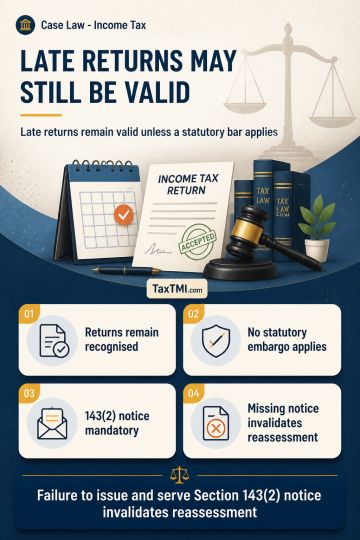
Faceless assessment safeguards require requested personal hearings and adequate final show-cause response time, failing which reassessment is required...
HC allowed the petitioner's challenge to GST registration cancellation, directing the adjudicating authority to: (1) grant a personal hearing to the petitioner, and (2) decide the revocation application within two months of such hearing. The court recognized the petitioner's procedural grievance regarding non-resolution of the registration cancellation matter and mandated a time-bound resolution mechanism. The interim order provides the petitioner an opportunity to present their case and ensures a definitive outcome within a specified timeframe, thereby addressing the administrative delay in processing the GST registration revocation application.
HC allowed the petitioner's challenge to GST registration cancellation, directing the adjudicating authority to: (1) grant a personal hearing to the petitioner, and (2) decide the revocation application within two months of such hearing. The court recognized the petitioner's procedural grievance regarding non-resolution of the registration cancellation matter and mandated a time-bound resolution mechanism. The interim order provides the petitioner an opportunity to present their case and ensures a definitive outcome within a specified timeframe, thereby addressing the administrative delay in processing the GST registration revocation application.
Note: It is a system-generated summary and is for quick reference only.
 TaxTMI
  TaxTMI