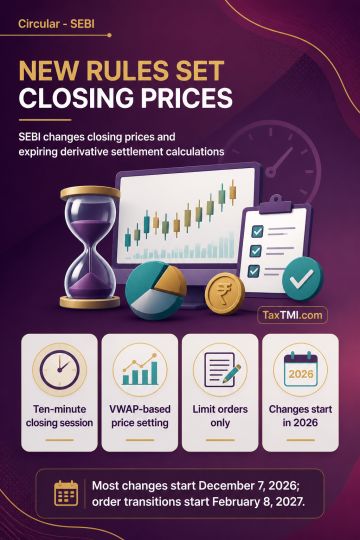
Form 26AS evidence requires successor-entity accounting verification after business transfer, while invoice-supported related-party advertising expend...
Money-laundering judgment timing requires awaiting the scheduled-offence decision despite continuation of the underlying trial where outcomes directly...
Accredited investor eligibility expands through securities-market exposure, while alternative investment fund disputes require prescribed resolution a...
In a dispute before ITAT regarding income classification, the tribunal examined a broker's ledger account with a debit balance. The tribunal determined that the debit balance represented a future and options (F & O) bill credit margin, indicating the broker was expecting payment from the assessee. Correspondingly, the assessee's accounts showed a matching credit balance representing a liability to the broker. Consequently, the tribunal ruled that the debit balance cannot be construed as the assessee's income. The tribunal deleted the contested income addition and allowed the assessee's appeal, affirming the principle that ledger entries reflecting pending financial transactions do not constitute taxable income.
In a dispute before ITAT regarding income classification, the tribunal examined a broker's ledger account with a debit balance. The tribunal determined that the debit balance represented a future and options (F & O) bill credit margin, indicating the broker was expecting payment from the assessee. Correspondingly, the assessee's accounts showed a matching credit balance representing a liability to the broker. Consequently, the tribunal ruled that the debit balance cannot be construed as the assessee's income. The tribunal deleted the contested income addition and allowed the assessee's appeal, affirming the principle that ledger entries reflecting pending financial transactions do not constitute taxable income.
Note: It is a system-generated summary and is for quick reference only.
 TaxTMI
 TaxTMI

 of 4915