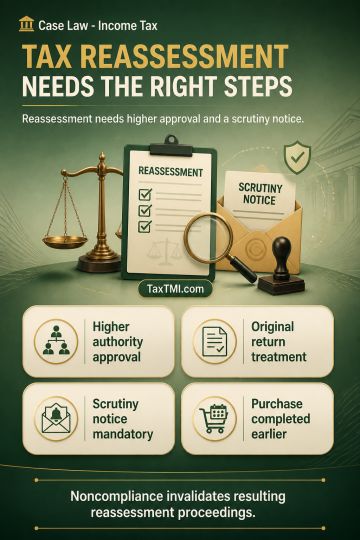
Opportunity to furnish unsecured-loan confirmations is required before reassessment initiation; proceedings require fresh consideration after taxpayer...
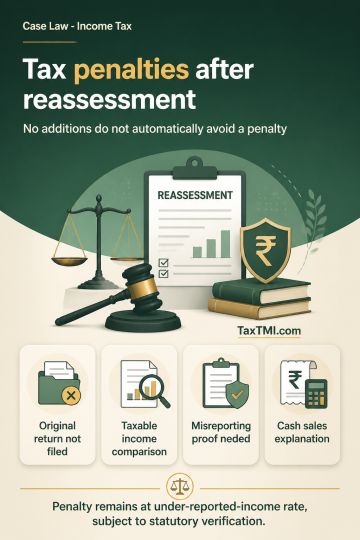
Under-reporting on a first reassessment return attracts penalty, while enhanced misreporting penalty requires proof of a statutory misreporting catego...
The ITAT examined whether the PCIT could invoke jurisdiction under Section 263 when the AO had already raised specific queries, received detailed responses, and passed an order under Section 143(3). The tribunal held that where the AO conducted an inquiry and considered the assessee's submissions, it does not constitute a case of lack of inquiry but potentially an inadequate inquiry. Consequently, the PCIT cannot set aside the original assessment order. The tribunal set aside the PCIT's order and allowed the assessee's grounds, emphasizing that procedural scrutiny does not automatically justify revisional jurisdiction when substantive examination has occurred.
The ITAT examined whether the PCIT could invoke jurisdiction under Section 263 when the AO had already raised specific queries, received detailed responses, and passed an order under Section 143(3). The tribunal held that where the AO conducted an inquiry and considered the assessee's submissions, it does not constitute a case of lack of inquiry but potentially an inadequate inquiry. Consequently, the PCIT cannot set aside the original assessment order. The tribunal set aside the PCIT's order and allowed the assessee's grounds, emphasizing that procedural scrutiny does not automatically justify revisional jurisdiction when substantive examination has occurred.
Note: It is a system-generated summary and is for quick reference only.
 TaxTMI
  TaxTMI
 of 4915