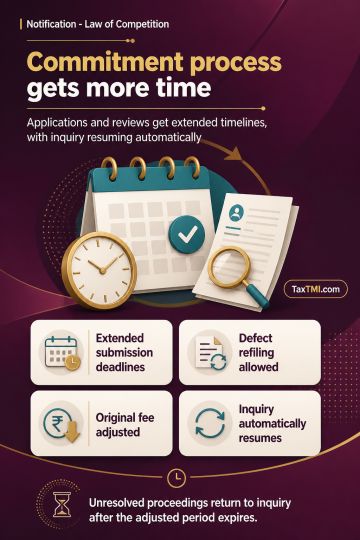
Commitment proceedings gain extended timelines, structured defect refiling, and automatic resumption of inquiry after the adjusted completion period e...
Merger control notice and disclosure rules: Supreme Court limits penalties, rejects reopening of approved combination, and sets aside adverse findings...
Abuse of dominant position allegations against an exchange found not prima facie; regulator reliance on sectoral expertise upheld and no investigation...
All appeals dismissed; finding of anti-competitive bid-rigging upheld under Sections 3(3)(c), 3(3)(d) read with 3(1); cease-and-desist and total-turno...
SC interprets Sections 29(1) and 29(1A) of the Competition Act, 2002, clarifying the discretionary powers of the Competition Commission. The Court distinguishes between the mandatory nature of "shall" in Section 29(1) and the discretionary "may" in Section 29(1A), emphasizing the Commission's expert discretion in determining whether to initiate a detailed investigation after issuing a show cause notice. The judgment reaffirms that the Commission retains flexibility in deciding the investigative process, rejecting a rigid two-phase mechanism. The review petition challenging the majority judgment's interpretation is ultimately allowed, with the Court providing critical clarification on the statutory provisions' scope and application.
SC interprets Sections 29(1) and 29(1A) of the Competition Act, 2002, clarifying the discretionary powers of the Competition Commission. The Court distinguishes between the mandatory nature of "shall" in Section 29(1) and the discretionary "may" in Section 29(1A), emphasizing the Commission's expert discretion in determining whether to initiate a detailed investigation after issuing a show cause notice. The judgment reaffirms that the Commission retains flexibility in deciding the investigative process, rejecting a rigid two-phase mechanism. The review petition challenging the majority judgment's interpretation is ultimately allowed, with the Court providing critical clarification on the statutory provisions' scope and application.
Note: It is a system-generated summary and is for quick reference only.
 TaxTMI
  TaxTMI