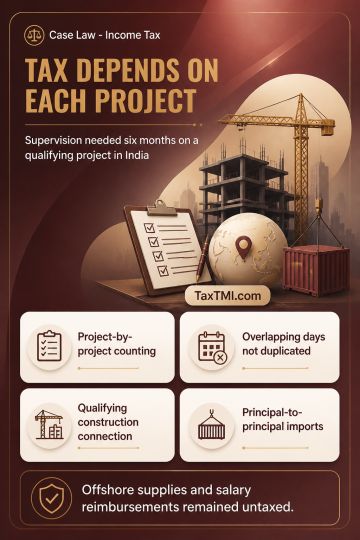
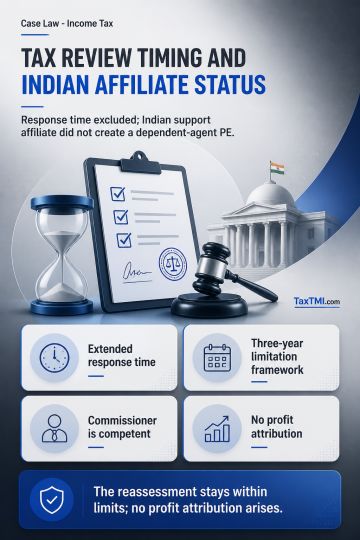
Supervisory permanent establishment requires project-wise duration and qualifying construction nexus; offshore supplies and salary reimbursements rema...
Transfer-pricing comparability permits fresh objections and filters where software service comparables are functionally unsuitable for arm's-length pr...
Territorial rendering requirement excludes China-based management and consultancy services from fees for technical services under the India-China DTAA...
HC dismissed the writ petition involving fraudulent Input Tax Credit (ITC) availment. The Court held that adequate notice was provided to the Petitioner and, given the fraudulent nature of the case and potential impact on the GST regime, writ jurisdiction would not be exercised. The Petitioner was granted permission to file an appellate remedy by 15th July, 2025, with mandatory pre-deposit under Section 107 of CGST Act, 2017, ensuring the appeal would be adjudicated on merits without limitation bar. The petition was disposed of, directing the Petitioner to pursue alternative legal remedies.
HC dismissed the writ petition involving fraudulent Input Tax Credit (ITC) availment. The Court held that adequate notice was provided to the Petitioner and, given the fraudulent nature of the case and potential impact on the GST regime, writ jurisdiction would not be exercised. The Petitioner was granted permission to file an appellate remedy by 15th July, 2025, with mandatory pre-deposit under Section 107 of CGST Act, 2017, ensuring the appeal would be adjudicated on merits without limitation bar. The petition was disposed of, directing the Petitioner to pursue alternative legal remedies.
Note: It is a system-generated summary and is for quick reference only.
 TaxTMI
  TaxTMI
 of 4878