Transfer-pricing aggregation of distinct support-service and subcontract transactions was rejected, while debt-free receivables attracted no notional ...
Customs exemptions cover photovoltaic assembly machinery and PVF backsheets, while fully declared cleared imports may avoid confiscation and penalties...
Specific tariff classification for LCD devices overrides treatment as electricity-meter parts, defeating differential duty, extended limitation, and p...
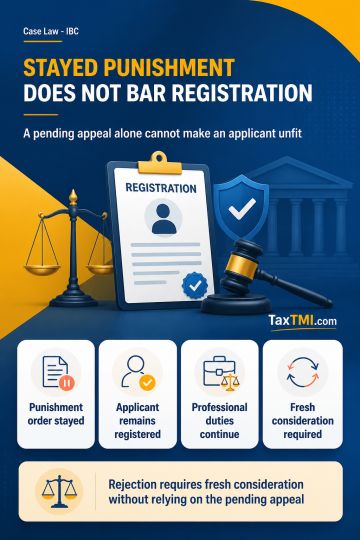
Stayed disciplinary punishment does not establish unfitness for insolvency professional registration; reconsideration must disregard mere pendency of ...
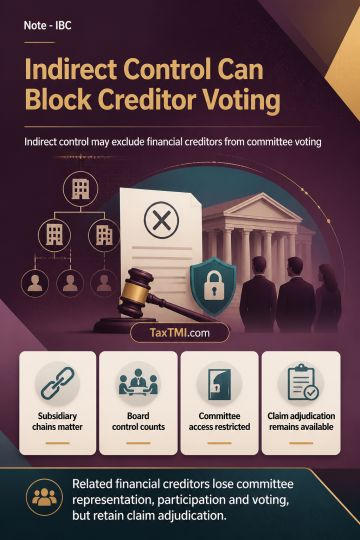
Indirect corporate control can create related-party status, excluding financial creditors from Committee of Creditors representation, participation an...
Scientific research association approval requires continuing SIRO status, annual donation reporting, and donor certificates for the approved foundatio...
Page of 4888
Press 'Enter' after typing page number.
241 to 260 of 97755 Results
❮
❯
❯❯
0 / 200
Expand Note
Add to Folder
No Folders have been created
+
Are you sure you want to delete "My most important" ?
HC held that the impugned notice and order were quashed due to lack of jurisdictional propriety. The respondent-Authority failed to provide adequate intimation regarding ITC reversal, and the petitioner demonstrated genuine unawareness of procedural requirements. The Court remanded the matter back to the Adjudicating Authority to conduct a de novo examination of ITC reversal for 2017-18, directing a fresh order within twelve weeks. While the Appellate Authority had dismissed the appeal on delay grounds, the HC recognized procedural constraints and procedural fairness, effectively setting aside the original order and providing an opportunity for proper administrative review.
HC held that the impugned notice and order were quashed due to lack of jurisdictional propriety. The respondent-Authority failed to provide adequate intimation regarding ITC reversal, and the petitioner demonstrated genuine unawareness of procedural requirements. The Court remanded the matter back to the Adjudicating Authority to conduct a de novo examination of ITC reversal for 2017-18, directing a fresh order within twelve weeks. While the Appellate Authority had dismissed the appeal on delay grounds, the HC recognized procedural constraints and procedural fairness, effectively setting aside the original order and providing an opportunity for proper administrative review.
Note: It is a system-generated summary and is for quick reference only.
 TaxTMI
  TaxTMI
 of 4888