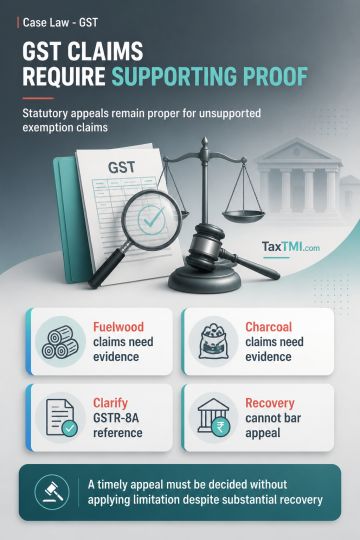
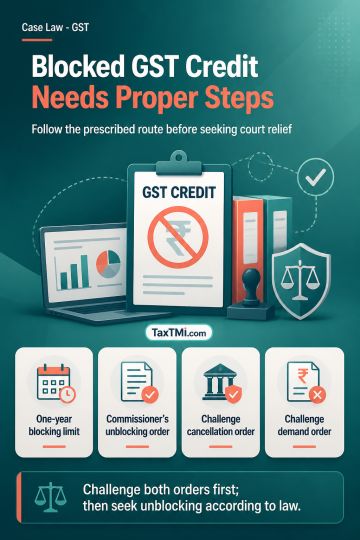
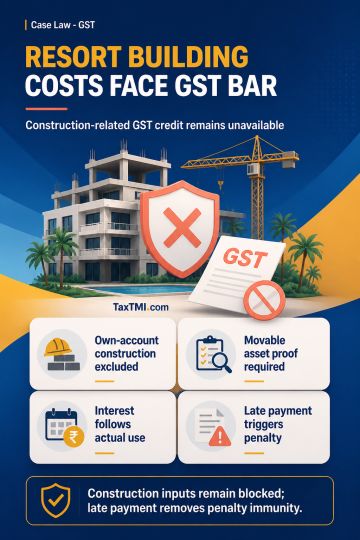
Blocked input tax credit for resort construction remains unavailable; interest follows actual utilisation, while delayed payment attracts statutory pe...
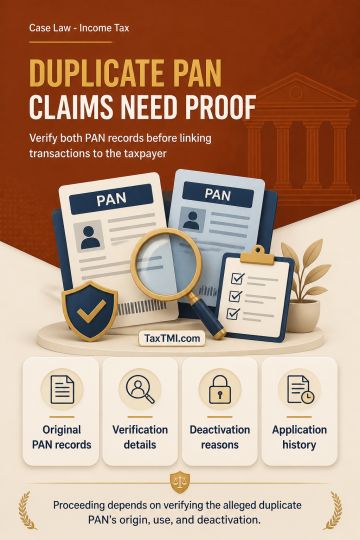
Duplicate PAN allocation requires record verification and deactivation reasons before assessment-related transactions can be attributed to an assessee...
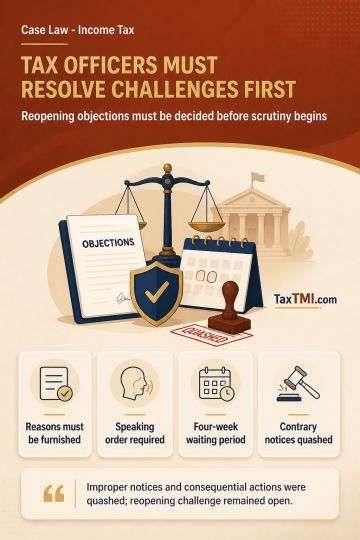
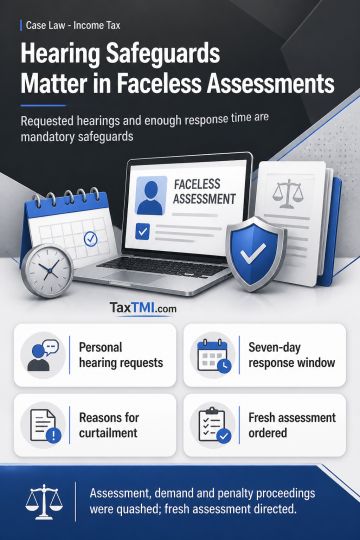
Faceless assessment safeguards require requested personal hearings and adequate final show-cause response time, failing which reassessment is required...
CESTAT appellate proceedings involving export documentation and customs regulations. The tribunal examined issues of jurisdictional scope under section 28AAA of the Customs Act, evidentiary standards for statements under section 108, and penalty provisions. Key findings included invalidating penalties under sections 114AA, 114(iii), and 114AB due to procedural irregularities in obtaining statements and lack of substantive evidence of fraudulent intent. The tribunal critically analyzed the documentary proof requirements for export transactions, emphasizing the exporter's responsibility to demonstrate goods' destination. Ultimately, the impugned order was set aside, with the appeal being allowed, effectively quashing the penalties and confiscation orders previously imposed by the Principal Commissioner.
CESTAT appellate proceedings involving export documentation and customs regulations. The tribunal examined issues of jurisdictional scope under section 28AAA of the Customs Act, evidentiary standards for statements under section 108, and penalty provisions. Key findings included invalidating penalties under sections 114AA, 114(iii), and 114AB due to procedural irregularities in obtaining statements and lack of substantive evidence of fraudulent intent. The tribunal critically analyzed the documentary proof requirements for export transactions, emphasizing the exporter's responsibility to demonstrate goods' destination. Ultimately, the impugned order was set aside, with the appeal being allowed, effectively quashing the penalties and confiscation orders previously imposed by the Principal Commissioner.
Note: It is a system-generated summary and is for quick reference only.
 TaxTMI
  TaxTMI
 of 4886