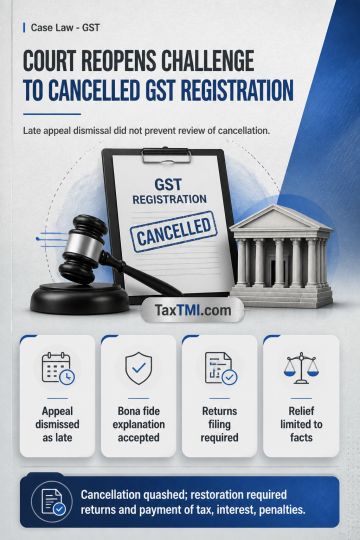
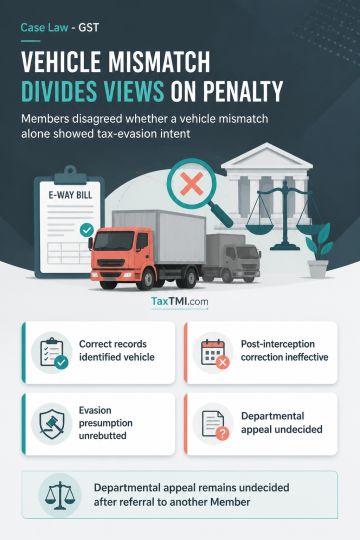
GST cross-empowerment remains effective without conditional notification, while duplicate proceedings require established safeguards against overlappi...
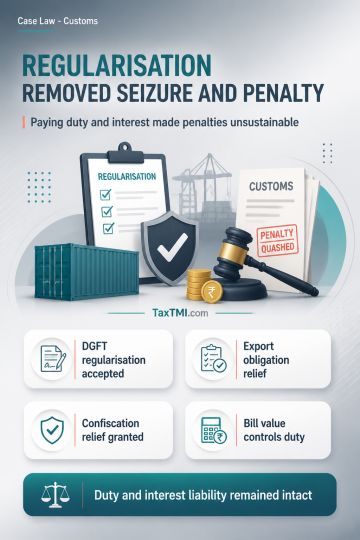
CESTAT held that invoking jurisdiction under section 28AAA of the Customs Act without DGFT's license cancellation is invalid. The tribunal found procedural irregularities in the original order, determining that customs authorities cannot unilaterally challenge export scrip validity without DGFT's formal cancellation or initiation of cancellation proceedings. The appellate tribunal set aside the impugned order, ruling that the exporter's responsibility is to prove goods reached the focus market, but penalties against the appellant and its director were unsustainable due to lack of substantive evidence and procedural defects. Appeal was consequently allowed, effectively nullifying the original confiscation and penalty orders.
CESTAT held that invoking jurisdiction under section 28AAA of the Customs Act without DGFT's license cancellation is invalid. The tribunal found procedural irregularities in the original order, determining that customs authorities cannot unilaterally challenge export scrip validity without DGFT's formal cancellation or initiation of cancellation proceedings. The appellate tribunal set aside the impugned order, ruling that the exporter's responsibility is to prove goods reached the focus market, but penalties against the appellant and its director were unsustainable due to lack of substantive evidence and procedural defects. Appeal was consequently allowed, effectively nullifying the original confiscation and penalty orders.
Note: It is a system-generated summary and is for quick reference only.
 TaxTMI
  TaxTMI
 of 4881