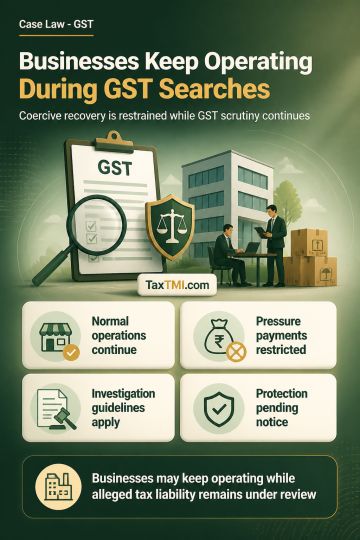
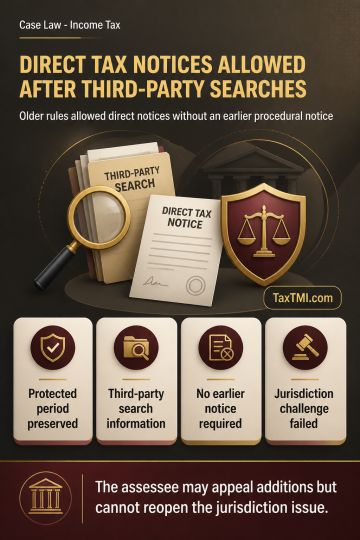
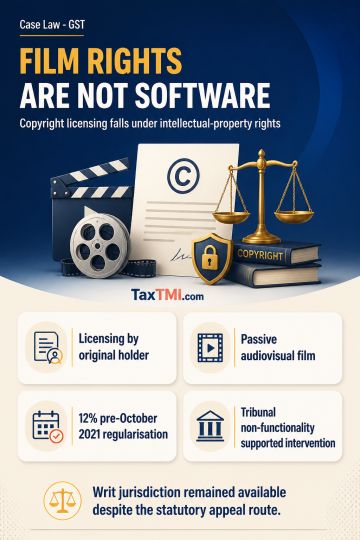
Coercive recovery during GST searches is restrained pending scrutiny, preserving normal business operations and requiring adherence to investigation g...
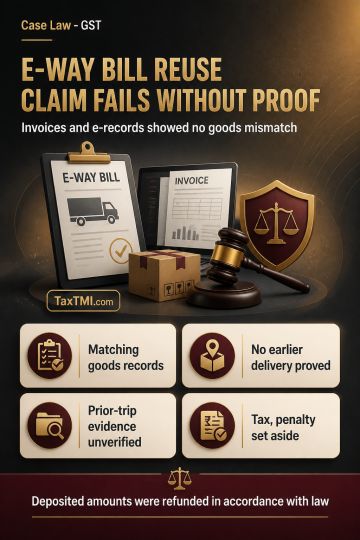
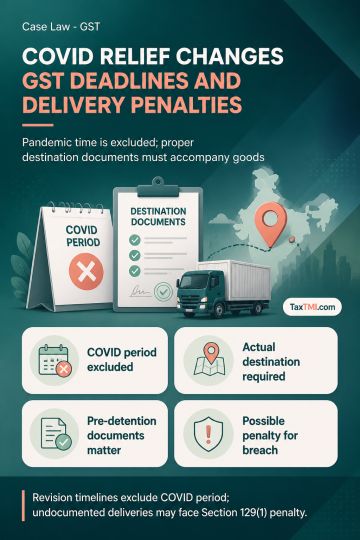
COVID-19 limitation exclusion and destination-specific e-way bills govern revisional timelines and penalties for undocumented third-party plywood deli...
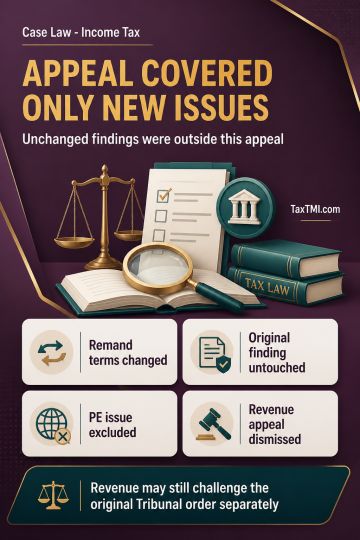
Questions arising from miscellaneous application orders cannot challenge unaltered Tribunal findings, leaving the original order separately challengea...
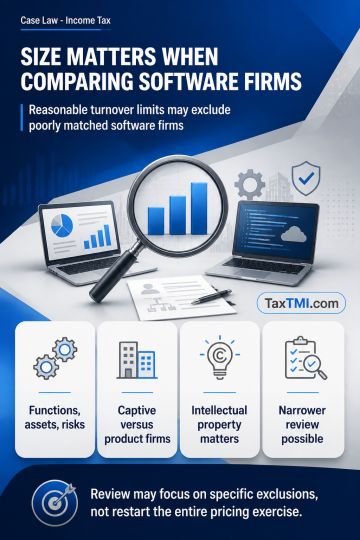
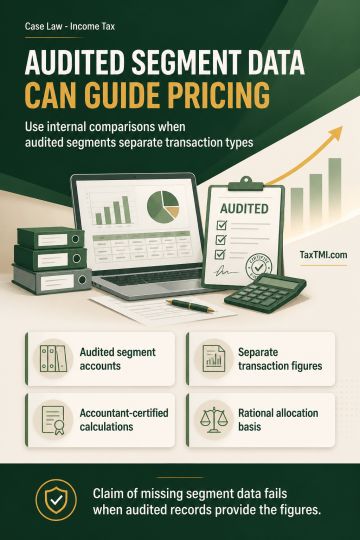
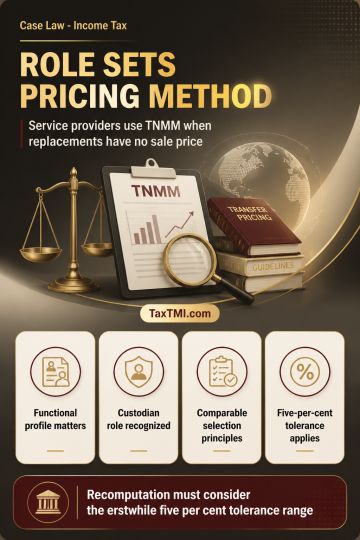
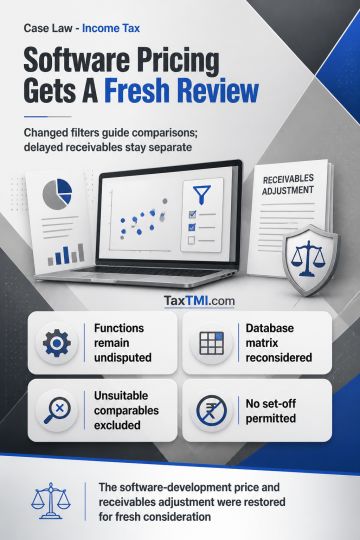
Transfer-pricing comparability filters require fresh arm's-length analysis, while delayed receivables need separate reconsideration with working-capit...
Page of 4894
Press 'Enter' after typing page number.
721 to 740 of 97867 Results
❮
❯
❯❯
0 / 200
Expand Note
Add to Folder
No Folders have been created
+
Are you sure you want to delete "My most important" ?
NCLAT held that a Resolution Plan cannot be approved under Section 30(2)(b) r/w Section 31 without ensuring minimum payment to Operational Creditors and dissenting Financial Creditors, which must not be less than liquidation value as per Section 53. The Adjudicating Authority's role is strictly limited to verifying plan compliance with statutory requirements, without exercising equitable jurisdiction. The Committee of Creditors retains exclusive commercial wisdom in determining resolution plan terms. The Appellate Tribunal cannot interfere with CoC's decision unless clear statutory violations exist. Consequently, the appeal was dismissed, affirming the original resolution plan's approval while emphasizing strict adherence to Insolvency Code provisions.
NCLAT held that a Resolution Plan cannot be approved under Section 30(2)(b) r/w Section 31 without ensuring minimum payment to Operational Creditors and dissenting Financial Creditors, which must not be less than liquidation value as per Section 53. The Adjudicating Authority's role is strictly limited to verifying plan compliance with statutory requirements, without exercising equitable jurisdiction. The Committee of Creditors retains exclusive commercial wisdom in determining resolution plan terms. The Appellate Tribunal cannot interfere with CoC's decision unless clear statutory violations exist. Consequently, the appeal was dismissed, affirming the original resolution plan's approval while emphasizing strict adherence to Insolvency Code provisions.
Note: It is a system-generated summary and is for quick reference only.
 TaxTMI
  TaxTMI
 of 4894