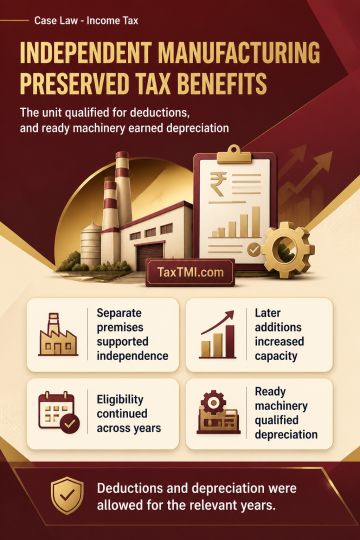
Independent manufacturing undertaking eligibility preserves Section 80IA/80IB deductions, while machinery kept ready for use qualifies for depreciatio...
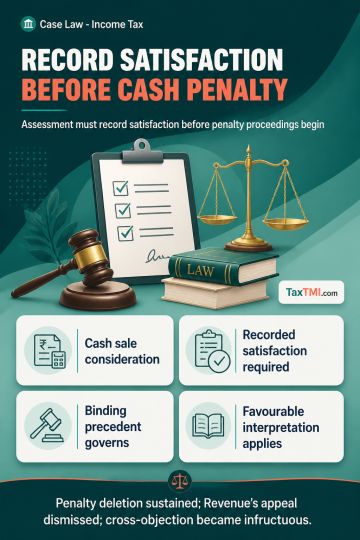
Assessing Officer Satisfaction Requirement Bars Penalty for Cash Receipt in Immovable-Property Sale Cases Where Initiation Lacks Recorded Satisfaction...
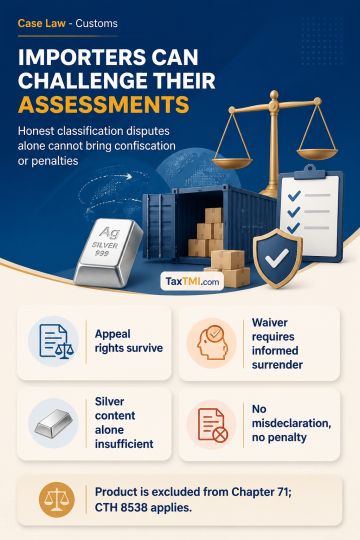
Self-assessed import entries remain appealable, while bona fide classification disputes without misdeclaration cannot justify confiscation or penaltie...
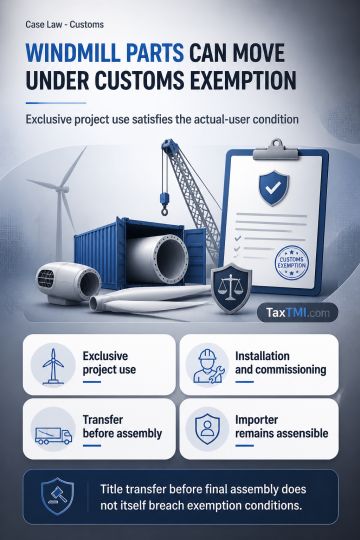
Actual-user customs exemption conditions permit turnkey project transfers when imported windmill components are exclusively used for installation and ...
Customs offence disqualification excludes civil contraventions, preventing refusal of a private bonded warehouse licence based solely on monetary pena...
ITAT adjudicated multiple tax-related issues for the assessee. The tribunal allowed the appeal regarding R&D expenditure under section 35(2AB), finding that prior to 2016 amendment, no specific procedural methodology existed for certifying expenditure, thus the Assessing Officer erroneously disallowed the weighted deduction. The tribunal also deleted disallowance under section 40A(2)(b) regarding commission payments, noting identical facts from the preceding year. Regarding depreciation, ITAT held electrical installations are part of plant and machinery, thereby allowing 15% depreciation instead of 10% as originally proposed by the AO. The assessee's appeals were substantially allowed across all contested issues.
ITAT adjudicated multiple tax-related issues for the assessee. The tribunal allowed the appeal regarding R&D expenditure under section 35(2AB), finding that prior to 2016 amendment, no specific procedural methodology existed for certifying expenditure, thus the Assessing Officer erroneously disallowed the weighted deduction. The tribunal also deleted disallowance under section 40A(2)(b) regarding commission payments, noting identical facts from the preceding year. Regarding depreciation, ITAT held electrical installations are part of plant and machinery, thereby allowing 15% depreciation instead of 10% as originally proposed by the AO. The assessee's appeals were substantially allowed across all contested issues.
Note: It is a system-generated summary and is for quick reference only.
 TaxTMI
  TaxTMI
 of 4897