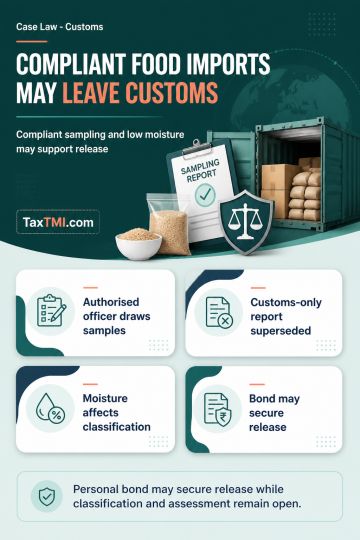
Food import sampling requirements support provisional release where unseized consignments conform to standards and raw areca classification is unestab...
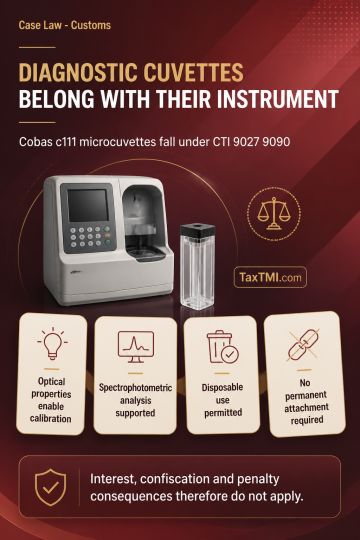
Diagnostic microcuvette classification follows sole-use analytical function, placing specialised disposable cuvettes with their analyser rather than g...
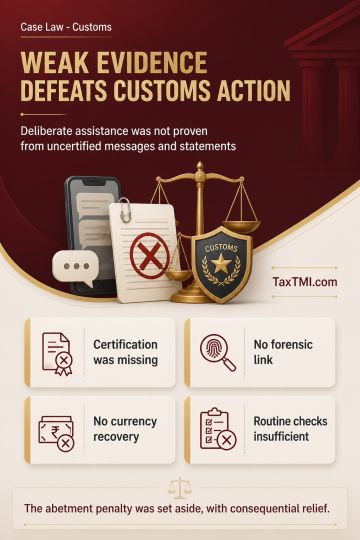
Customs Broker licensing proceedings fail when their offence-report foundation collapses and authorisation, advisory, and KYC duties remain unbreached...
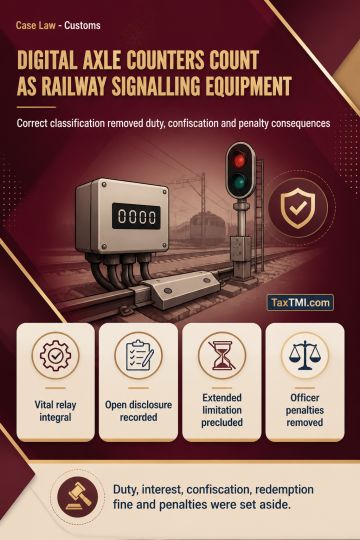
Tariff classification of Digital Axle Counters affirmed as electro-mechanical railway signalling equipment, eliminating duty, confiscation and penalty...
HC dismissed multiple writ petitions challenging customs license rejection and cancellation orders. The court held that since the Customs Act, 1962 provides an adequate statutory remedy through appeals, the writ petitions under Article 226 were not maintainable. The court referenced precedents emphasizing that when a specific statutory appeal mechanism exists, judicial review through writ jurisdiction is inappropriate. Consequently, all petitions were dismissed, with petitioners directed to utilize statutory appeal mechanisms if adverse orders are passed.
HC dismissed multiple writ petitions challenging customs license rejection and cancellation orders. The court held that since the Customs Act, 1962 provides an adequate statutory remedy through appeals, the writ petitions under Article 226 were not maintainable. The court referenced precedents emphasizing that when a specific statutory appeal mechanism exists, judicial review through writ jurisdiction is inappropriate. Consequently, all petitions were dismissed, with petitioners directed to utilize statutory appeal mechanisms if adverse orders are passed.
Note: It is a system-generated summary and is for quick reference only.
 TaxTMI
  TaxTMI
 of 4888