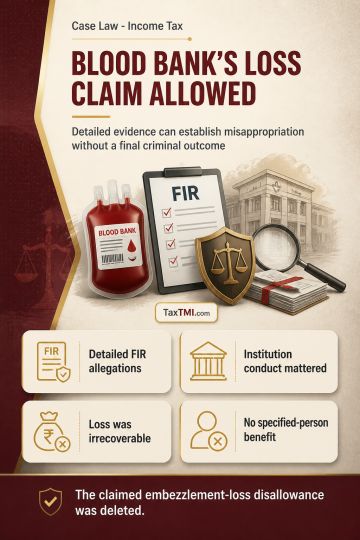
Embezzlement losses in charitable institutions remain allowable when misappropriation is established, irrecoverable, and not a specified-person benefi...
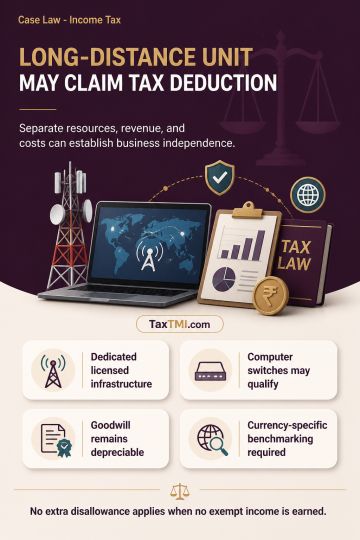
National long-distance undertaking status supports deduction where separately licensed infrastructure, resources, revenue, and expenditure establish c...
Agency reimbursement income follows contractual deposit-liability computation, while pending deposit collections do not constitute deemed-dividend loa...
ITAT upheld CIT(A)'s order, rejecting revenue's penalty claim under section 270A against a charitable trust. The tribunal found no conditions met for penalty imposition, noting the assessee voluntarily filed a revised computation with corrected revenue expenditure. The tribunal determined the excess expenditure claim was within the statutory 15% limit under section 11(1)(a), and the discrepancy did not constitute a deliberate attempt to under-report income. Consequently, the penalty was deleted, and the decision was rendered in favor of the assessee.
ITAT upheld CIT(A)'s order, rejecting revenue's penalty claim under section 270A against a charitable trust. The tribunal found no conditions met for penalty imposition, noting the assessee voluntarily filed a revised computation with corrected revenue expenditure. The tribunal determined the excess expenditure claim was within the statutory 15% limit under section 11(1)(a), and the discrepancy did not constitute a deliberate attempt to under-report income. Consequently, the penalty was deleted, and the decision was rendered in favor of the assessee.
Note: It is a system-generated summary and is for quick reference only.
 TaxTMI
  TaxTMI
 of 4891