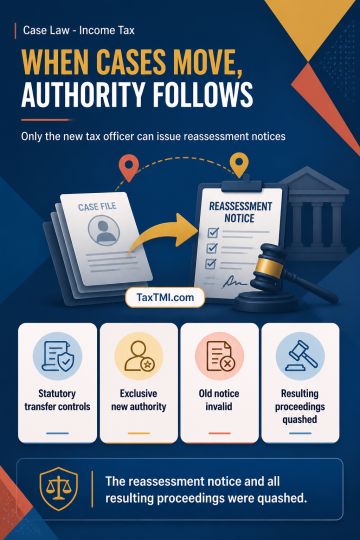
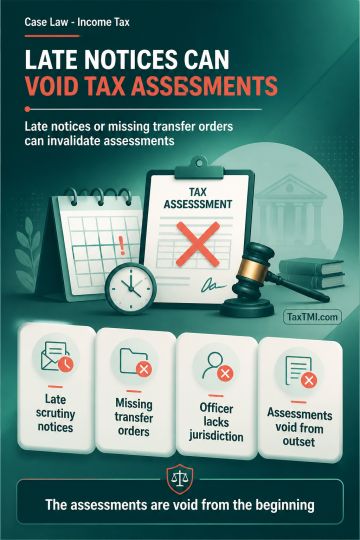
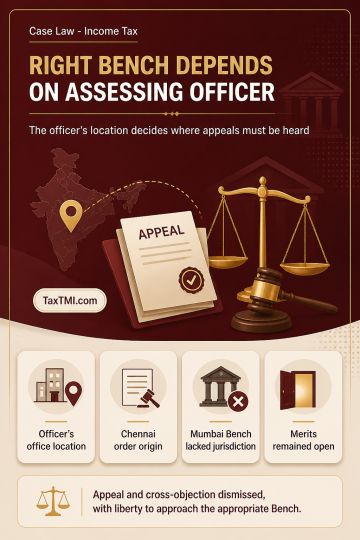
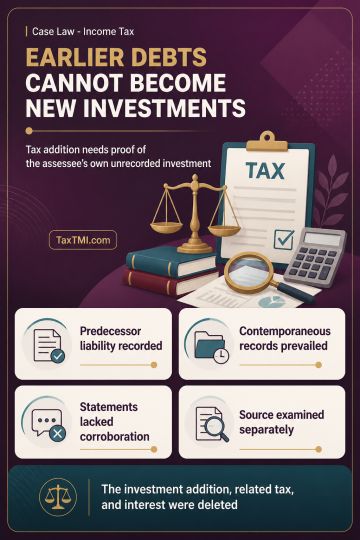
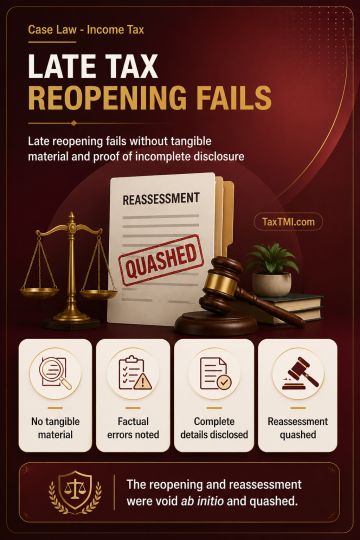
Assessing Officer jurisdiction after statutory transfer invalidates reassessment notices issued by transferor officers and nullifies resulting proceed...
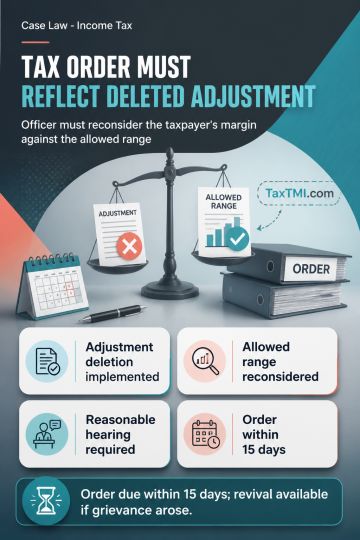
Consequential appeal-effect orders must implement rectification deleting working-capital adjustments and reconsider the resulting arm's-length range c...
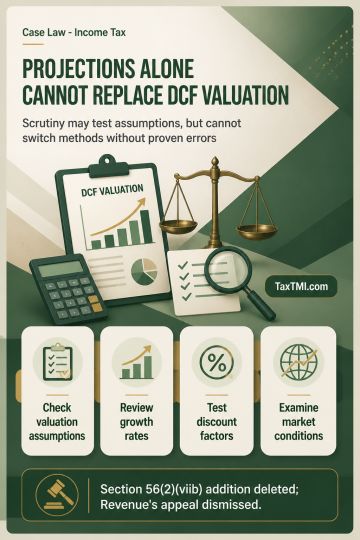
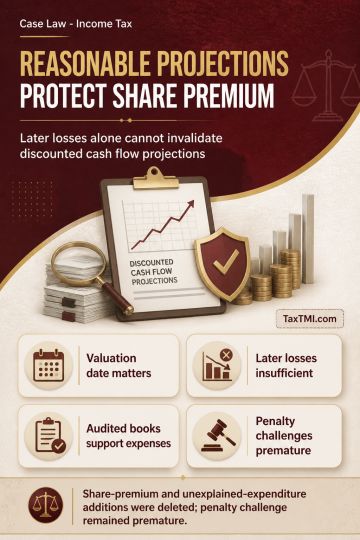
Discounted cash flow valuation protects share premium where projections are reasonable, while audited book expenses defeat unexplained-expenditure add...
Section 54 construction relief survives pre-transfer commencement when completion occurs within the statutory period, excluding ineligible spouse-owne...
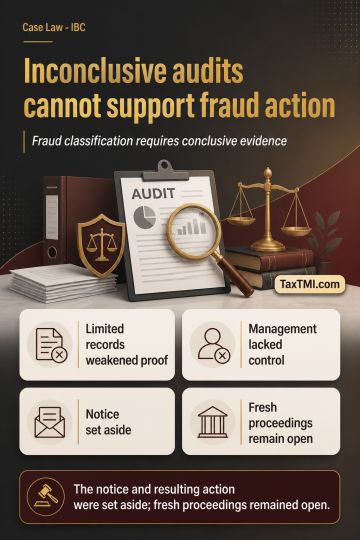
Fraud classification show-cause notices founded on inconclusive forensic audit material cannot sustain action, permitting fresh proceedings on conclus...
Page of 4886
Press 'Enter' after typing page number.
341 to 360 of 97710 Results
❮
❯
❯❯
0 / 200
Expand Note
Add to Folder
No Folders have been created
+
Are you sure you want to delete "My most important" ?
HC ruled on the legality of creating additional dues by GST Department after NCLT's Resolution Plan approval. The court held that once a Resolution Plan is approved under IBC, subsequent claims by creditors are impermissible as they would disrupt the resolution process. The court specifically noted that the tax department was aware of IBC proceedings and had previously filed claims through the Resolution Professional. Consequently, the court quashed the assessment order and demand notice issued under Section 74 of CGST Act, 2017, which were raised post-Resolution Plan approval, thereby protecting the sanctity of the resolution mechanism and preventing potential disruption to the insolvency resolution process.
HC ruled on the legality of creating additional dues by GST Department after NCLT's Resolution Plan approval. The court held that once a Resolution Plan is approved under IBC, subsequent claims by creditors are impermissible as they would disrupt the resolution process. The court specifically noted that the tax department was aware of IBC proceedings and had previously filed claims through the Resolution Professional. Consequently, the court quashed the assessment order and demand notice issued under Section 74 of CGST Act, 2017, which were raised post-Resolution Plan approval, thereby protecting the sanctity of the resolution mechanism and preventing potential disruption to the insolvency resolution process.
Note: It is a system-generated summary and is for quick reference only.
 TaxTMI
  TaxTMI
 of 4886