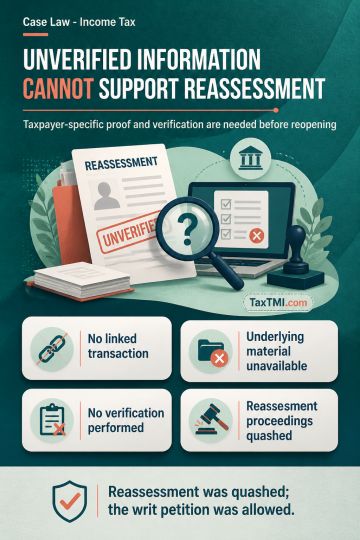
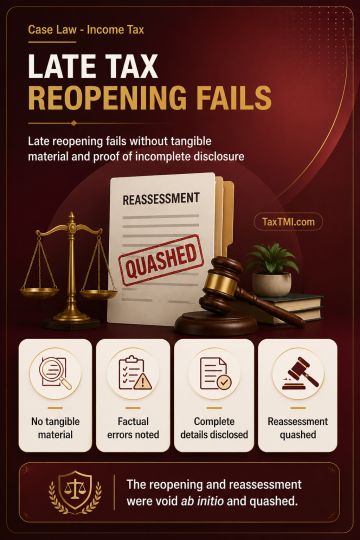
Unverified Insight Portal Information Cannot Justify Reassessment Without a Verified Taxpayer-Specific Income-Escape Nexus or Demonstrated Application...
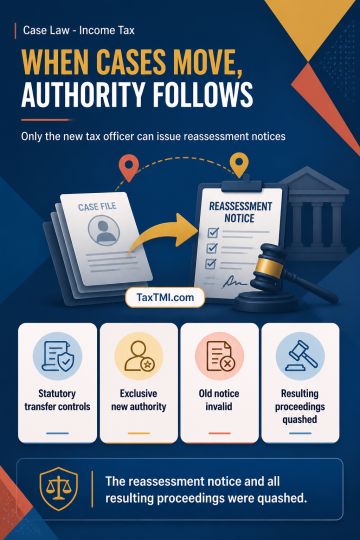
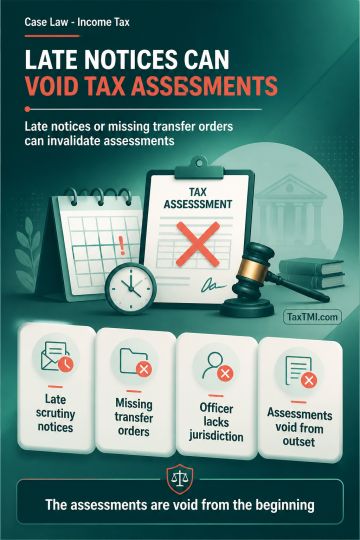
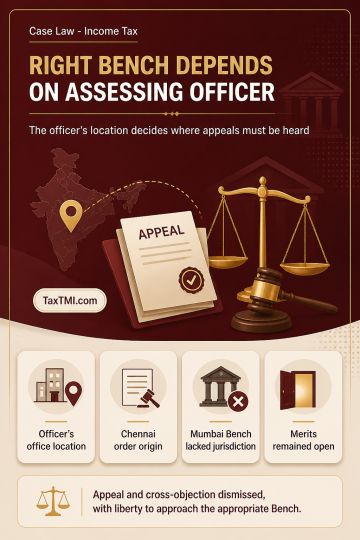
Assessing Officer jurisdiction after statutory transfer invalidates reassessment notices issued by transferor officers and nullifies resulting proceed...
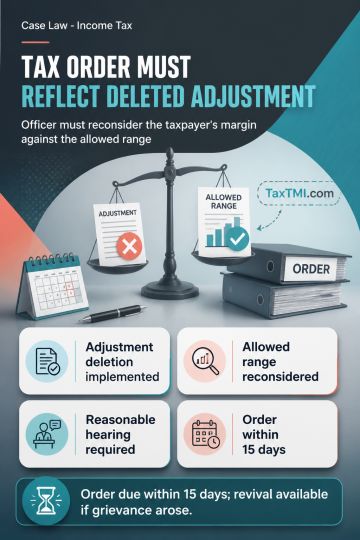
Consequential appeal-effect orders must implement rectification deleting working-capital adjustments and reconsider the resulting arm's-length range c...
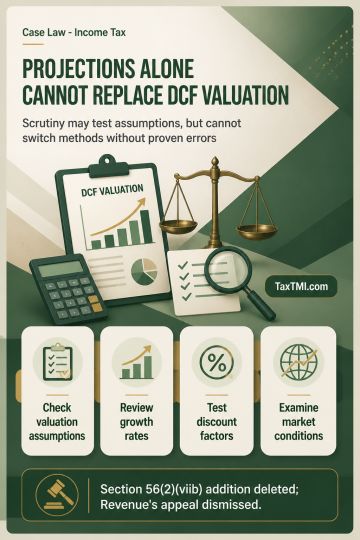
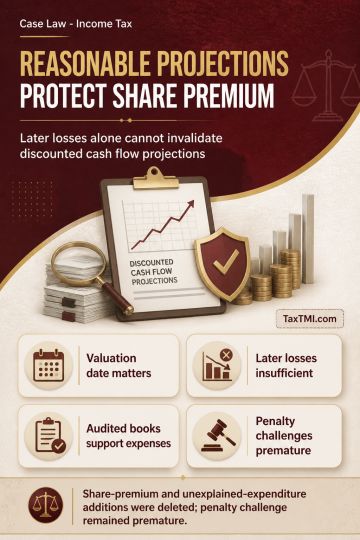
Discounted cash flow valuation protects share premium where projections are reasonable, while audited book expenses defeat unexplained-expenditure add...
Section 54 construction relief survives pre-transfer commencement when completion occurs within the statutory period, excluding ineligible spouse-owne...
HC denied anticipatory bail in a tax fraud case involving fraudulent input tax credit and invoice manipulation. The court carefully examined the accused's role, referencing SC precedents on parity principles. Despite arguments about punishment quantum, the court prioritized broader societal interests and potential investigation impediment. The HC determined that granting anticipatory bail would potentially compromise the investigative process, considering the prima facie evidence of systematic fraudulent activities. The court emphasized that anticipatory bail is not a shield against serious accusations that adversely affect societal integrity. Accordingly, the anticipatory bail application was dismissed, preserving the investigative agency's ability to conduct a comprehensive inquiry into the alleged financial misconduct.
HC denied anticipatory bail in a tax fraud case involving fraudulent input tax credit and invoice manipulation. The court carefully examined the accused's role, referencing SC precedents on parity principles. Despite arguments about punishment quantum, the court prioritized broader societal interests and potential investigation impediment. The HC determined that granting anticipatory bail would potentially compromise the investigative process, considering the prima facie evidence of systematic fraudulent activities. The court emphasized that anticipatory bail is not a shield against serious accusations that adversely affect societal integrity. Accordingly, the anticipatory bail application was dismissed, preserving the investigative agency's ability to conduct a comprehensive inquiry into the alleged financial misconduct.
Note: It is a system-generated summary and is for quick reference only.
 TaxTMI
  TaxTMI
 of 4886